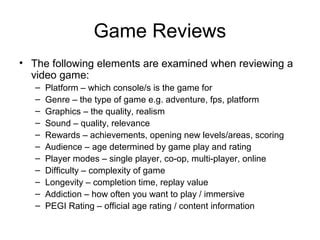
Should gaming review scores update post-launch patches? When?
The Evolving Nature of Game Criticism
The landscape of video game development has shifted dramatically over the past decade. Gone are the days when a game was a finished, unchangeable product upon release. Today, post-launch patches, bug fixes, content updates, and even significant overhauls are commonplace. This continuous evolution presents a fundamental challenge to traditional game review methodologies, particularly concerning the permanence of a numerical score. The core question facing critics and consumers alike is: should an initial review score, often a snapshot of a game at launch, be updated to reflect its improved (or sometimes worsened) state after subsequent patches?
The Case for Updating Scores
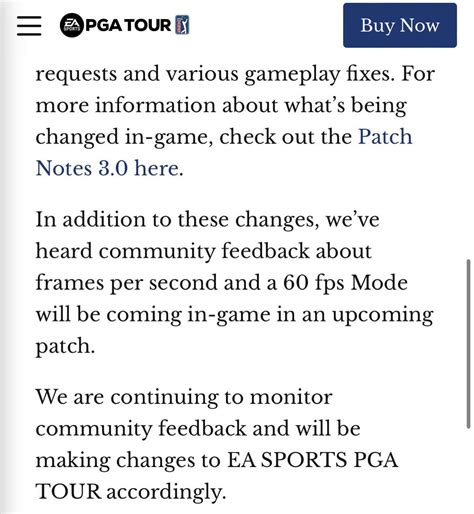
Proponents argue that updating review scores is essential for consumer accuracy and journalistic integrity. When a game launches in a demonstrably broken or unfinished state, a low score reflects that initial experience. However, if developers diligently fix bugs, optimize performance, and add missing features, the game’s quality can improve substantially. Maintaining an outdated, low score would then misrepresent the current product being sold and played, potentially misleading new buyers who encounter a vastly superior experience.
Furthermore, in an era where games are often released with a ‘live service’ mentality, their true value and quality may only emerge months or even years post-launch. Websites and publications that commit to updating scores demonstrate a commitment to reflecting the ‘true’ state of the product, fostering greater trust with their audience.

The Argument Against Revision
Conversely, many argue against updating initial review scores, adhering to the principle that a review captures a specific moment in time: the game at launch. This perspective holds that the initial launch experience is a critical part of a game’s history and should be judged on its own merits. A low score for a broken launch serves as a crucial warning to early adopters and holds developers accountable for releasing an unfinished product, regardless of later fixes.
Logistically, the idea of constantly revising scores presents a nightmare for review outlets. How often should scores be updated? For every minor patch? What constitutes a significant enough change to warrant a re-evaluation? The continuous effort required could divert resources from new releases, creating an unsustainable model. Moreover, it could inadvertently incentivize developers to release unfinished games with the expectation that positive post-launch updates will eventually erase initial negative feedback.
The “When” Question: Navigating Timing
If review scores *are* to be updated, the timing is paramount. Several potential triggers exist:
- Major Patches: Significant updates that address widespread technical issues, introduce substantial new content, or overhaul core gameplay mechanics are strong candidates for re-evaluation.
- Expansions/DLC: While often reviewed separately, major expansions that fundamentally alter the base game’s experience could prompt a re-assessment of the original title’s score.
- Game of the Year/Definitive Editions: These re-releases often bundle all post-launch content and fixes, presenting a consolidated product that warrants a fresh look.
- Community Consensus: When a game’s public perception dramatically shifts due to ongoing support or a critical turnaround, it might signal a need for critical re-evaluation.
Establishing clear, consistent guidelines for when a score update is merited is crucial to avoid arbitrary revisions and maintain credibility.
Alternative Approaches to Post-Launch Assessment
Given the complexities, some publications have adopted alternative methods instead of simply altering the original score:
- Living Reviews: These reviews are explicitly designed to evolve over time, with regular updates to the text and perhaps a dynamic score that reflects the game’s current state.
- Addendums or Editor’s Notes: Keeping the original score intact but adding a prominent, dated addendum to the review text detailing post-launch changes and their impact.
- Follow-up Articles/Re-reviews: Publishing entirely new articles or full re-reviews months or years later, explicitly focusing on the game’s improved state, while linking back to the original review. This preserves the historical record of the launch experience.
- Dual Scoring: Some might propose an initial ‘launch score’ and a ‘current score,’ though this could add unnecessary confusion.
Conclusion: A Complex Balance
The debate over updating review scores for post-launch patches underscores a fundamental tension in game criticism: the desire to provide accurate, up-to-date information versus the need to preserve historical context and hold developers accountable for launch quality. There is no single, easy answer. While a purely static score can become outdated and misleading, constant revision risks diminishing the significance of the initial launch experience and creating an unsustainable workload for reviewers.
Ultimately, a nuanced approach is required. Publishers and critics must clearly communicate their policies regarding post-launch assessments. Whether through living reviews, detailed addendums, or well-timed re-reviews, the goal should be to provide consumers with the most comprehensive and accurate understanding of a game’s quality, both at launch and throughout its evolving lifecycle, without sacrificing the integrity of the critical process.