





SSD vs. NVMe for gaming load times: Which upgrade offers the best value?
For PC gamers, every millisecond counts, not just in-game, but also when waiting for levels to load or fast travel points to become available. The days of mechanical hard drives (HDDs) causing painfully slow load times are largely behind us, thanks to the widespread adoption of Solid State Drives (SSDs). However, with the rise of NVMe (Non-Volatile Memory Express) SSDs, a new debate has emerged: which storage technology truly offers the best value for reducing gaming load times?

Understanding the Basics: SSD vs. NVMe
Before diving into performance specifics, it’s crucial to understand what distinguishes a traditional SATA SSD from an NVMe drive.
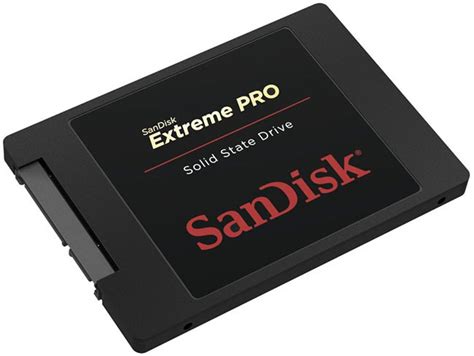
- SATA SSD (Serial ATA Solid State Drive): These drives use the older SATA interface, which was originally designed for HDDs. While a significant upgrade over HDDs, SATA has a theoretical bandwidth limit of 600 MB/s (megabytes per second). SATA SSDs are widely compatible, affordable, and come in a 2.5-inch form factor, making them easy to install in most desktops and many laptops.
- NVMe SSD (Non-Volatile Memory Express Solid State Drive): NVMe is a communication protocol designed specifically for SSDs. It leverages the high-speed PCI Express (PCIe) interface, bypassing the bottlenecks of SATA. This allows NVMe drives to achieve significantly faster sequential read and write speeds, often ranging from 2,000 MB/s to over 7,000 MB/s depending on the PCIe generation (Gen3, Gen4, Gen5). NVMe drives typically come in the M.2 form factor, a small, gum-stick-sized module that plugs directly into a motherboard slot.
The Real Impact on Gaming Load Times
The core question for gamers is whether the raw speed advantage of NVMe translates into a perceptibly faster gaming experience. For many popular games, the answer is nuanced.
While NVMe drives boast speeds many times faster than SATA SSDs, game load times aren’t always a direct reflection of sequential read speed. Games often load numerous small files rather than a single large one, and the CPU, RAM, and game engine optimization also play significant roles. Benchmarks show that while NVMe drives are almost always faster than SATA SSDs for loading games, the difference isn’t always as dramatic as the raw specifications suggest. Often, an NVMe drive might shave off a few seconds from a 15-second load time, or perhaps a second or two from a 5-second load.
For most current games, the jump from an HDD to a SATA SSD is a revolutionary change, cutting load times by 70-90%. The further jump from a SATA SSD to an NVMe SSD is an evolutionary one, typically yielding an additional 5-20% improvement. Some newer titles, especially those optimized for Microsoft’s DirectStorage API (which is designed to leverage high-speed NVMe drives directly with the GPU), might show more significant gains, but widespread adoption and optimization are still in early stages.

Price Point and Value Proposition
This is where the decision often hinges. Historically, NVMe drives carried a substantial price premium, but their costs have steadily decreased, making them much more competitive.
- SATA SSDs: These remain the most budget-friendly option for solid-state storage. They offer excellent performance for their price, especially for users upgrading from an HDD. A 1TB SATA SSD can often be found for under $50-$70.
- NVMe SSDs (Gen3): PCIe Gen3 NVMe drives offer a significant speed boost over SATA at a slightly higher, but often justifiable, price point. A 1TB Gen3 NVMe drive typically costs $60-$90, making them a strong contender for value.
- NVMe SSDs (Gen4/Gen5): The latest generations offer the highest speeds, but their price-to-performance ratio for *pure gaming load times* might not always represent the best value. While excellent for heavy workstation tasks or future-proofing, the extra cost for a 1TB Gen4 or Gen5 drive (which can range from $70-$150+) might only yield marginal gaming load time improvements over Gen3 in most current titles.
Considering the raw performance gains against the cost, PCIe Gen3 NVMe drives often hit a sweet spot, providing noticeable improvements over SATA at a very reasonable price. For those on a very tight budget, a SATA SSD is still an excellent choice and a massive upgrade from an HDD.

Beyond Load Times: Other Benefits and Considerations
While gaming load times are the primary focus, storage performance impacts other aspects of your PC experience:
- Overall System Responsiveness: NVMe drives contribute to a snappier operating system, faster application launches, and quicker file transfers, making the entire PC feel more responsive.
- Content Creation: If you also edit videos, stream, or work with large files, the high sequential speeds of NVMe drives provide a substantial advantage.
- Future-Proofing: As game engines evolve and DirectStorage becomes more prevalent, NVMe drives (especially Gen4 and above) will likely become more critical for maximizing gaming performance and reducing asset streaming stutter.
- Motherboard Compatibility: Ensure your motherboard has an available M.2 slot that supports NVMe (and ideally PCIe Gen3 or Gen4) if you’re considering an NVMe drive.

Making Your Decision
Ultimately, the best value upgrade depends on your specific needs and budget:
- Best Budget Upgrade (from HDD): A SATA SSD. It’s the most cost-effective way to drastically improve your gaming experience and overall system responsiveness.
- Best All-Around Value: A PCIe Gen3 NVMe SSD. It offers a significant performance boost over SATA at a very competitive price, providing an excellent balance of speed and cost for most gamers.
- For Enthusiasts & Future-Proofing: A PCIe Gen4 NVMe SSD. If you have the budget, a compatible system, and want the absolute fastest storage available for current and upcoming titles (especially with DirectStorage in mind), Gen4 is the way to go. Gen5 is currently overkill for most users, including gamers, due to its high cost and limited real-world performance gains in current gaming scenarios.
In conclusion, while NVMe drives undoubtedly offer superior raw performance, the value proposition for gamers hinges on diminishing returns. For a truly transformative upgrade, move from an HDD to any SSD. For the best blend of performance and cost efficiency in current gaming, a PCIe Gen3 NVMe drive is often the sweet spot, providing noticeable improvements without breaking the bank. As technology progresses, the gap will undoubtedly widen, but for now, even a well-chosen SATA SSD or a mid-range NVMe offers an exceptional gaming experience.


