Strategy for updating game reviews after major post-launch patches?
The Evolving Landscape of Game Reviews
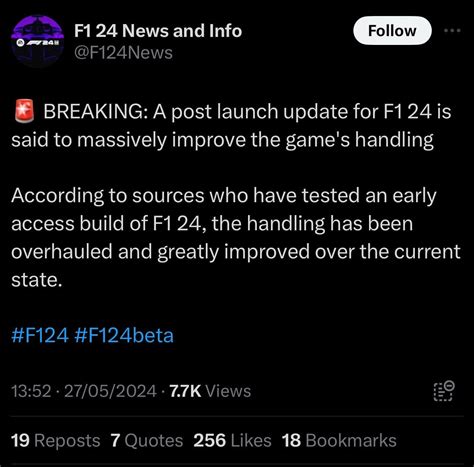
In the modern gaming era, a game’s launch state is often just the beginning of its journey. Developers frequently release substantial post-launch patches, sometimes transforming a title completely through bug fixes, performance optimizations, new content, and even fundamental mechanic overhauls. This dynamic reality poses a unique challenge for game reviewers: how to maintain the relevance and accuracy of initial reviews when the reviewed product undergoes significant evolution?
The dilemma lies in striking a balance between the snapshot judgment of a release-day review and the ongoing reality of a live-service or continuously updated game. An outdated review can mislead consumers and unfairly represent a developer’s efforts. A robust strategy for updating game reviews is no longer optional; it’s a professional necessity.
Why Updating Reviews Matters
The primary impetus for updating reviews stems from a commitment to fairness and utility. Firstly, it provides developers with the recognition they deserve for addressing criticisms and improving their product. A game that was initially flawed but significantly improved deserves a revised assessment that reflects its current quality.
Secondly, and arguably more importantly, updated reviews serve the consumer. Gamers rely on reviews to make informed purchasing decisions. Presenting an outdated review of a game that has drastically changed can lead to buyer’s remorse or, conversely, cause players to overlook a now-excellent title. Accuracy is paramount for trust and credibility.
Maintaining Journalistic Integrity
Beyond fairness and consumer guidance, the practice of updating reviews upholds the journalistic integrity of the reviewer and the publication. It demonstrates an understanding of the medium’s evolving nature and a commitment to providing the most current and relevant information possible. Ignoring major updates renders a review a historical document rather than a contemporary assessment.
Identifying a “Major” Patch
Not every small hotfix warrants a review update. A clear set of criteria helps determine when a patch is significant enough to trigger a re-evaluation.
Criteria for Re-evaluation:
- Significant Bug Fixes: Patches that eliminate game-breaking bugs, widespread glitches, or pervasive technical issues that heavily impacted the initial score.
- Performance Enhancements: Improvements that drastically alter frame rates, load times, or stability, especially on console or lower-end PC hardware.
- Content Additions: Major expansions, new game modes, characters, or substantial quests that add considerable playtime and value.
- Core Mechanic Overhauls: Changes to combat, progression systems, economy, or fundamental gameplay loops that redefine the player experience.
- Balance Adjustments: Widespread rebalancing that significantly impacts gameplay difficulty, player power, or meta-strategies.
Strategies for Review Updates
Once a major patch is identified, several strategies can be employed to update the review, each with its own benefits and appropriate use cases.
The Full Re-Review
This approach involves writing an entirely new review, often with a new score, to replace or stand alongside the original. It’s best suited for games that have undergone a complete transformation, where the initial review no longer bears resemblance to the current experience (e.g., No Man’s Sky). This requires significant time and resources but offers the most comprehensive update.
The Addendum/Update Section
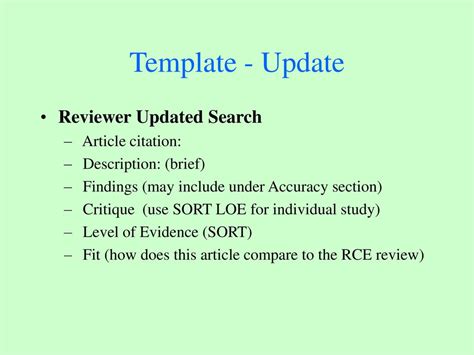
The most common and practical method. An additional section is appended to the original review, detailing the changes brought by the patch, their impact on gameplay, and any adjustments to the original score or critique. This preserves the original review as a historical document while providing current context. A clear ‘Updated On’ date is essential.
Score-Only Adjustment
For patches that significantly improve or worsen a game but don’t necessitate extensive re-writing, a simple score adjustment can be made. This is usually accompanied by a brief editor’s note explaining the change and linking to patch notes or a separate article detailing the updates.
The “Living Review”
Less common but gaining traction, particularly for live-service games. A living review is continuously updated with new content and changes, often lacking a single definitive score. Instead, it provides an ongoing assessment of the game’s current state, with clear date stamps for each update. This format emphasizes the journey of the game rather than a static evaluation.
Best Practices and Transparency
Regardless of the chosen strategy, transparency with the audience is paramount. Reviewers should:
- Clearly Mark Updated Content: Use headings, bold text, or distinct sections to highlight what has been added or changed.
- Provide a Changelog: Summarize key updates and their impact.
- State the Date of Update: Always include a prominent date stamp indicating when the review was last modified.
- Explain the Rationale: Briefly articulate *why* the review was updated and what specifically prompted the re-evaluation.
- Maintain Access to Original Text: If a full re-review replaces the original, consider archiving the initial review or providing a link to it for historical context.
![Nintendo Game Boy High Tech Transparent Console [HK] - Consolevariations](/images/aHR0cHM6Ly90czIubW0uYmluZy5uZXQvdGg/aWQ9T0lQLlV4SEVJTzBzczBUSEh6TXRKbUltRXdIYUgxJnBpZD0xNS4x.webp)
Conclusion: Upholding Review Relevance
Developing a consistent and transparent strategy for updating game reviews after major post-launch patches is an essential component of modern game criticism. It allows reviewers to adapt to the dynamic nature of game development, provide accurate and timely information to consumers, and uphold the credibility of their work. By embracing these strategies, reviewers can ensure that their evaluations remain relevant, fair, and valuable in an ever-evolving industry, reinforcing their role not just as initial evaluators, but as ongoing curators of gaming experiences.