What are the most effective VOD review strategies for solo queue players aiming for competitive Esports?
Unlocking Competitive Potential Through VOD Review
For solo queue players dreaming of breaking into the competitive Esports scene, raw mechanical skill is only one piece of the puzzle. The ability to objectively analyze one’s own gameplay, identify weaknesses, and strategically improve is paramount. Video-on-demand (VOD) review is the most potent tool in a player’s arsenal for achieving this. It transforms fleeting in-game moments into tangible learning opportunities, allowing for deep introspection that’s impossible during the heat of a match.

Setting the Foundation: Mindset and Specific Goals
Before diving into a VOD, the right mindset is crucial. Approach the review with a singular focus: personal improvement. Avoid the trap of blaming teammates or external factors. Every decision, every movement, and every missed opportunity should be viewed through the lens of “What could I have done better?”
Equally important is setting specific, actionable goals for each review session. Instead of a general “get better,” focus on areas like: “How was my laning phase against X champion?” or “Did I contribute effectively to objective control in the mid-game?” Specific goals provide a roadmap and prevent the review from becoming a passive re-watch.
Objective Self-Assessment
Competitive play demands a ruthless honesty with oneself. When reviewing, actively question your decisions. Why did you push that wave? Why did you rotate there? Was your timing optimal? This critical self-reflection is the bedrock of rapid improvement.
The Deeper Dive: Segmented Analysis
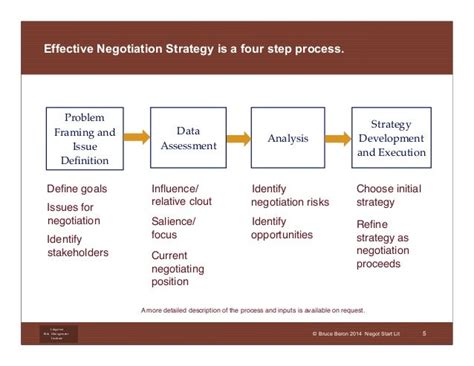
A full game VOD can be overwhelming. Break it down into digestible segments. Start with an initial watch-through at normal speed to get a feel for the game’s flow and identify key turning points. Then, revisit these critical moments with a fine-tooth comb.
Phase-by-Phase Breakdown
- Laning Phase: Focus on creep score (CS), trade patterns, vision placement, and map awareness. Did you recognize jungle pathing? Were you efficient with resources?
- Mid-Game Rotations: Evaluate your decision-making regarding lane swaps, gank timings, and objective setups (e.g., dragon, baron, towers). Were your roams impactful?
- Team Fights: Analyze positioning, spell usage, target prioritization, and communication (even if solo queue, internal comms count). Did you use your abilities optimally? Did you commit at the right time?
Decision-Making Analysis
Pause frequently. Before a critical play, ask yourself: “What are my options here? What are the potential outcomes?” Then, unpause and compare your in-game decision with what you now perceive as the optimal play. Understand the ‘why’ behind good and bad decisions.

Identifying Key Areas of Improvement
While reviewing, use a notebook or a digital document to log specific mistakes and recurring patterns. Categorize them to better understand your dominant weaknesses.
Macro Play
- Map Awareness: How often did you check the minimap? Did you react to enemy movements?
- Objective Control: Were you present for critical objectives? Did you pressure the map to create objective opportunities?
- Wave Management: Did you manage minion waves effectively to create pressure or set up recalls?
Micro Play
- Mechanics: Were your ability combos clean? Was your target selection optimal in fights?
- Farming Efficiency: How did your CS compare to your opponent’s? Were you missing easy last hits?
- Resource Management: Did you overuse abilities, leaving yourself vulnerable? Did you manage your health/mana effectively?
Actionable Takeaways and Implementation
The review process is incomplete without translating insights into actionable steps. For each identified mistake, brainstorm a specific practice method to correct it.
- If your map awareness is poor, make a conscious effort to check the minimap every 5-10 seconds in your next game.
- If your combo execution is off, spend time in practice mode perfecting it before queuing up.
Consistency is paramount. Integrate VOD review into your regular training routine. Even reviewing a short segment of a game can yield significant benefits. Share your VODs with higher-ranked friends or coaches for an external perspective, which can uncover blind spots.

Conclusion
VOD review is not merely re-watching a game; it’s a structured learning process that accelerates skill development for solo queue players aspiring to competitive Esports. By adopting an objective mindset, setting specific goals, meticulously analyzing gameplay segments, and consistently implementing learned lessons, you can transform your solo queue experience into a powerful training ground, pushing you closer to your competitive ambitions.