What are the most effective VOD review techniques for Esports teams to pinpoint performance gaps?
Unlocking Performance: The Power of Strategic VOD Review
In the relentless pursuit of competitive excellence, Esports teams constantly seek an edge. Beyond practice and raw talent, one of the most potent analytical tools at their disposal is Video-on-Demand (VOD) review. This meticulous process of re-watching past matches isn’t just about reliving moments; it’s about systematically dissecting every decision, every movement, and every outcome to pinpoint performance gaps and forge a path to improvement. But not all VOD reviews are created equal. To truly elevate a team’s game, a structured, objective, and multi-faceted approach is essential.

Setting the Stage: Defining Objectives for Review
Before hitting play, a successful VOD review begins with clear objectives. Without them, teams risk aimless watching, leading to wasted time and unaddressed issues. Objectives can range from macro-level team strategy (“Why did our early game fail?”) to micro-level individual mechanics (“Was my positioning optimal in that team fight?”).
- Team-Centric Goals: Focus on overall strategy, communication breakdowns, objective control, and map awareness.
- Role-Specific Goals: Tailor analysis to a specific player’s responsibilities, such as a support player’s warding patterns or a jungler’s pathing efficiency.
- Opponent-Centric Goals: Analyze how opponents exploited weaknesses or what strategies they employed that might be adaptable.
Core Techniques for Pinpointing Gaps
Perspective Switching: Seeing Through Different Eyes
One of the most powerful techniques is reviewing the game from multiple player perspectives. What looked like an excellent play from a carry player’s POV might reveal critical missed information or poor map awareness from a support player’s perspective. This helps illuminate communication failures and differing understandings of the game state.
Role-Specific Analysis: Deep Diving into Responsibilities
Instead of watching the entire game generally, focus on a single role for a complete VOD review. For instance, watch only the mid-laner’s actions, tracking their lane phase, rotations, item timings, and contribution to team fights. This hyper-focused approach reveals nuanced errors or excellences often missed in a broader review.
Timestamping Critical Moments: The Bookmark to Insight
During the review, mark specific timestamps where key events occurred: a crucial team fight, an objective contest, a successful gank, or a costly mistake. These timestamps become focal points for discussion and allow for quick navigation to problem areas. Tools that enable collaborative timestamping and note-taking are invaluable here.
Slow Motion and Frame-by-Frame: The Micro-Mechanics Unveiled
Some performance gaps lie in the smallest details. Using slow motion or even frame-by-frame analysis allows teams to scrutinize mechanical execution, ability usage, reaction times, and positioning in critical moments. This can reveal milliseconds of hesitation or slightly misaligned abilities that cumulatively lead to significant disadvantages.
Advanced Strategies for Deeper Understanding
Pattern Recognition: Identifying Recurring Issues
Individual mistakes are inevitable, but recurring patterns of error signal a systemic issue. Is the team consistently over-extending in certain situations? Are specific players repeatedly making the same positioning errors? Identifying these patterns is crucial for developing targeted drills and strategic adjustments.
The “What If” Scenario: Pre-Mortem Analysis
After a significant loss or a failed play, don’t just ask “What went wrong?” Ask “What could have gone differently?” Explore alternative decisions at critical junctures. This “pre-mortem” analysis helps teams develop better decision-making frameworks for future high-pressure situations, expanding their strategic toolkit.
Integrating Data with VODs: The Quantitative Edge
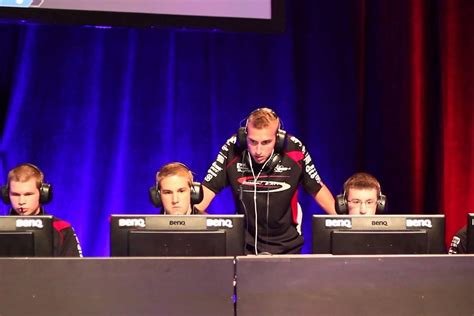
Combine qualitative VOD insights with quantitative in-game statistics. High death counts might be explained by aggressive positioning seen in the VOD. Low damage numbers could be linked to missed ability timings. This data fusion provides a more holistic understanding of performance, validating observations with hard numbers and vice-versa.
Facilitating Constructive Discussion and Action
A VOD review’s effectiveness isn’t just in identifying gaps but in translating those insights into actionable steps. The review session itself should be a safe space for open, constructive criticism, free from blame. Coaches play a vital role in moderating discussions, ensuring all voices are heard, and guiding the team toward practical solutions.
- Structured Feedback: Encourage players to identify their own mistakes first, then offer observations.
- Focus on Solutions: Shift conversations from “what went wrong” to “how can we fix it?”
- Assign Actionable Takeaways: Each review session should conclude with concrete objectives for individual players and the team as a whole for subsequent practice.
Conclusion: The Continuous Loop of Improvement
Effective VOD review is not a one-time event but a continuous, iterative process at the heart of any successful Esports team’s development. By employing systematic techniques such as perspective switching, detailed timestamping, pattern recognition, and fostering a culture of open discussion, teams can transform raw gameplay into invaluable lessons. This commitment to rigorous self-analysis is what allows teams to evolve, adapt, and consistently close the performance gaps that stand between them and victory.