What are top VOD review strategies for rapid competitive skill improvement?

Unlocking Potential: The Power of Strategic VOD Review
In the high-stakes world of competitive esports, raw talent alone is rarely enough to climb the ranks consistently. True growth stems from a disciplined approach to self-improvement, and perhaps no tool is more potent than the Video-On-Demand (VOD) review. Simply rewatching your gameplay, however, is not enough. Rapid skill improvement demands a strategic, structured, and analytical approach to VOD review, transforming passive viewing into active learning.

Defining Your Review Objectives
Before hitting play, establish clear goals for your review session. Without a specific focus, VOD review can quickly devolve into aimless rewatching. Your objectives should be measurable and relevant to your current performance.
- Identify Recurring Mistakes: Are you consistently mispositioning, mistiming abilities, or making poor rotations?
- Analyze Decision-Making: Focus on critical moments – why did you make a particular choice? What were the alternatives, and what were their potential outcomes?
- Scrutinize Specific Mechanics: Did you miss crucial last hits, execute a combo poorly, or fail a key aim duel?
- Evaluate Team Synergy: If reviewing team play, assess communication, coordinated pushes, or defensive rotations.
- Understand Opponent Play: How did the enemy exploit your weaknesses? What patterns did they exhibit?
The Systematic Approach to Analysis
A haphazard review yields minimal returns. Adopt a systematic methodology to ensure comprehensive coverage and actionable insights.
- Segment Gameplay: Break down the VOD into manageable chunks (e.g., laning phase, mid-game skirmishes, late-game teamfights, specific rounds).
- First Pass – Overview: Watch through a segment or the entire VOD once without pausing, simply to get a general feel for the game flow and major events.
- Second Pass – Detailed Scrutiny: Rewatch, but this time, pause frequently. Ask ‘why’ and ‘what if’ at every decision point. Use timestamps to mark key moments for further examination or discussion.
- Utilize Checklists: Create a personalized checklist of common mistakes or areas you’re actively working on. This ensures you consistently look for specific behaviors.

Key Areas for Focused Scrutiny
Decision-Making & Awareness
This is often the most impactful area. Pause at moments leading up to a significant event (e.g., a death, a lost objective). Evaluate your information gathering (map awareness, enemy cooldowns, item timings) and the rationale behind your actions. Were you proactive or reactive? Was there a better play you missed?
Positioning & Map Control
Your location on the map dictates your options and safety. Assess if you were in the optimal position to contribute, escape, or apply pressure. Did you respect enemy sightlines? Were you vulnerable to flanks? Understand how your positioning impacts both your survivability and your team’s overall map control.
Mechanics & Execution
While often trained separately, VOD review helps contextualize mechanical errors. Did you miss a critical ability because of pressure, or was it a fundamental misplay? Identify specific instances where mechanical precision could have altered the outcome, and consider how to drill those specific scenarios.

Transforming Insights into Action
The goal of VOD review isn’t just to identify mistakes, but to learn from them and prevent their recurrence. This requires a dedicated feedback loop:
- Categorize Mistakes: Group similar errors to identify overarching patterns. Is it a problem with aggression, defense, or resource management?
- Formulate Actionable Steps: For each identified weakness, create a concrete, practiceable goal. Instead of “don’t die as much,” try “improve warding around mid-lane by 20% in the first 10 minutes” or “focus on hitting the third combo component in skirmishes.”
- Implement & Practice: Take your actionable steps into your next few live games. Consciously focus on correcting those specific behaviors. Consider creating custom games or using aim trainers to drill mechanical fixes.
- Re-evaluate: Review future VODs to see if your efforts are bearing fruit. Is the pattern of error diminishing? Are new, more advanced errors emerging?
Advanced Techniques and Collaborative Review
To further refine your process, consider these advanced strategies:
- Comparison with Professionals: Watch VODs of top-tier players in similar situations. How do their decisions, positioning, and mechanics differ from yours?
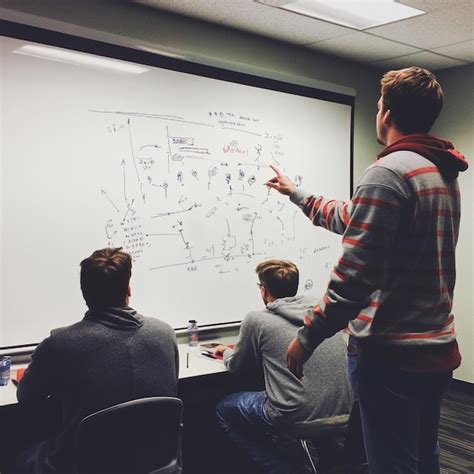
- Team VOD Review: For team-based games, collaborative review with your teammates or a coach is invaluable. Different perspectives can highlight individual blind spots and foster team cohesion.
- Coaching & Mentorship: A skilled coach can offer an objective external perspective, identify subtle errors, and guide you towards optimal strategies.
- Use Analytical Tools: Leverage in-game replay systems, third-party overlay software, or statistical analysis websites to augment your VOD review with hard data.
Conclusion: The Iterative Path to Mastery
VOD review is not a one-time fix but an iterative process crucial for rapid competitive skill improvement. By adopting a disciplined, objective, and systematic approach – setting clear objectives, scrutinizing key areas, and translating insights into actionable practice – players can unlock their full potential. Embrace VOD review not as a chore, but as your most powerful weapon in the quest for esports mastery.