What communication drills improve team synergy in competitive esports?
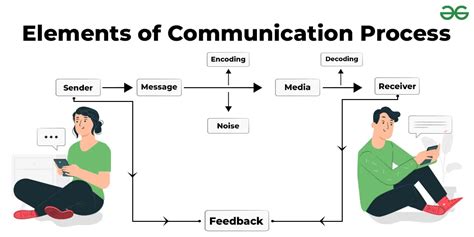
The Crucial Role of Communication in Esports Success
In the high-stakes, fast-paced world of competitive esports, individual skill is merely one piece of the puzzle. The true champions are often those teams that operate as a cohesive unit, their actions synchronized by flawless communication. Team synergy, the seamless collaboration born from mutual understanding and trust, hinges directly on how effectively players communicate. But how do professional teams cultivate this vital connection? Through targeted communication drills that refine not just what they say, but how, when, and why.
Unlike traditional sports where communication might involve hand signals or quick shouts, esports demands constant, precise, and often intricate verbal exchanges. From split-second shot-calling to strategic long-term planning, every word matters. Improving this aspect is a continuous process, requiring dedicated practice beyond just playing matches.
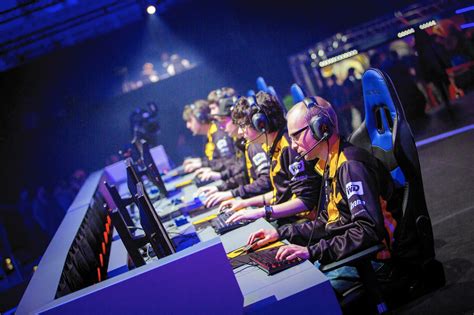
Understanding the Esports Communication Spectrum
Before diving into drills, it’s essential to recognize the different facets of communication in esports:
- Information Sharing: Reporting enemy positions, cooldowns, resources, and map states.
- Shot-Calling: Directing team movements, target priorities, and engagement decisions.
- Strategic Planning: Discussing overarching game plans, objective control, and resource management.
- Emotional Support: Maintaining morale, calming nerves, and encouraging teammates.
- Feedback: Constructive criticism and acknowledgment during and after games.
Each type requires clarity, conciseness, and contextual awareness. Drills should aim to sharpen all these areas.
Fundamental Drills for Clearer Communication
1. The “Silent Game” Drill (Non-Verbal & Map Awareness)
How it works: Teams play a few rounds or a full match with severely limited or no verbal communication. Players must rely solely on in-game pings, visual cues, and their understanding of their teammates’ tendencies. Post-game, they discuss what information was missed and how they could have conveyed it non-verbally or anticipated it better.
Benefits: Enhances map awareness, improves anticipation of teammates’ actions, highlights critical information that *must* be communicated verbally, and builds a deeper, almost telepathic understanding.
2. Call-Out Clarity & Conciseness Drill
How it works: During practice matches, players are given specific constraints on their call-outs. For example, all calls must be three words or less, or they must strictly follow a pre-defined format (e.g., “Enemy, Location, Intent”). Another variant involves having a coach or designated player mute themselves and only unmute to ask for clarification if a call-out is unclear or verbose.
Benefits: Drills players to prioritize information, eliminate filler words, and deliver crucial data with maximum efficiency under pressure. This is vital for games like CS:GO, Valorant, or League of Legends.
3. Role-Specific Communication Practice
How it works: Each player focuses exclusively on the communication relevant to their role. For example, a support player in a MOBA might focus on enemy spell cooldowns and ward placements, while a carry focuses on target priority and farm calls. During a dedicated practice session, players are encouraged to over-communicate their role-specific information, then streamline it.
Benefits: Ensures comprehensive information coverage without overlap, helps players understand what information their teammates *need* from them, and refines individual communication patterns for their specific position.
Advanced Drills for Deeper Synergy
1. Scenario-Based Decision Making
How it works: Coaches present the team with hypothetical in-game scenarios (e.g., “You’re down two players, but the enemy team is pushing objective X with low health. What’s the call?”). Teams must verbally walk through their decision-making process, articulating individual thoughts and collective strategy. This can be done outside the game or paused during a VOD review.
Benefits: Builds shared understanding of strategic principles, improves adaptive shot-calling under pressure, and exposes communication gaps in high-stress situations before they happen in a live match.
2. Post-Game Communication VOD Review
How it works: Beyond regular gameplay VOD reviews, dedicate sessions specifically to analyzing communication. Players listen back to their comms during critical moments, identifying instances of miscommunication, unclear calls, missed information, or emotional outbursts. They discuss what went wrong and how it could be improved.
Benefits: Provides objective evidence of communication successes and failures, fosters self-awareness, and allows for direct, constructive feedback on verbal habits and effectiveness. This is perhaps one of the most powerful tools for refinement.
3. “Blindfold” or Limited Information Drills
How it works: In certain games, one or more players might play with a limited view (e.g., turning off their monitor for a brief period, or only having minimap access). Their teammates must then verbally guide them entirely. This is particularly useful in games with heavy spatial awareness like RTS or tactical shooters.
Benefits: Drastically increases reliance on verbal information, forces extremely clear and precise directional/situational call-outs, and builds immense trust in teammates’ ability to communicate vital information.
Integrating Drills into Practice
For these drills to be effective, they must be:
- Consistent: Integrated regularly into the practice schedule, not just a one-off.
- Structured: With clear objectives and parameters for each drill.
- Followed by Feedback: Immediate and constructive analysis is crucial for learning.
- Adapted: Drills should evolve as the team’s communication improves and new challenges arise.
Conclusion
Team synergy is a dynamic force, constantly shaped by the quality of communication within a squad. By implementing a diverse set of targeted communication drills, esports teams can move beyond merely talking to truly understanding each other. These practices transform raw verbal exchanges into a finely tuned symphony of information, strategy, and support, ultimately paving the way for consistent high performance and championship success in competitive esports.