





What key settings optimize my gaming monitor for competitive FPS?

Unlocking Peak Performance: The Critical Role of Monitor Settings
In the high-stakes world of competitive First-Person Shooters (FPS), every millisecond counts. Beyond your powerful GPU and lightning-fast CPU, your gaming monitor is a direct window into the action, and its settings can significantly impact your performance. Properly configured, your monitor can provide a smoother, clearer, and more responsive experience, giving you the edge over opponents. This guide will walk you through the key settings you need to tweak to transform your display into a competitive FPS powerhouse.
Optimizing Your Refresh Rate for Fluidity
The refresh rate, measured in Hertz (Hz), indicates how many times your monitor updates the image on screen per second. For competitive FPS, higher is always better. A 144Hz, 240Hz, or even 360Hz monitor dramatically reduces motion blur and makes enemy movement appear much smoother, allowing for quicker target acquisition and tracking.
How to Set It:
- Verify Connection: Ensure you’re using a DisplayPort or HDMI 2.0 (or newer) cable, as older HDMI versions might not support higher refresh rates.
- Windows Settings: Right-click on your desktop > Display settings > Advanced display settings > Display adapter properties for Display 1 (or your primary monitor) > Monitor tab > Screen refresh rate. Select the highest available Hz.
- NVIDIA Control Panel / AMD Radeon Software: Access your GPU control panel. Under ‘Change Resolution,’ find your monitor and select the maximum refresh rate from the dropdown.
Mastering Response Time to Eliminate Ghosting
Response time refers to how quickly pixels can change from one color to another, typically measured in milliseconds (ms). A lower response time (1ms Grey-to-Grey is ideal) minimizes motion blur and ‘ghosting’ – where a trail follows fast-moving objects. Most gaming monitors include an ‘Overdrive’ or ‘OD’ setting to accelerate pixel transitions.
How to Set It:
- Monitor OSD (On-Screen Display): Navigate to your monitor’s OSD menu, usually under ‘Picture,’ ‘Gaming,’ or ‘Response Time’ settings.
- Experiment with Overdrive: Overdrive settings often have levels (e.g., Off, Normal, Fast, Ultrafast). Too aggressive an overdrive can introduce ‘inverse ghosting’ or ‘overshoot’ (a bright halo around moving objects). Start with ‘Fast’ or ‘Normal’ and test in-game to find the sweet spot that reduces blur without introducing artifacts.
Taming Input Lag for Instant Reactions
Input lag is the delay between when an action occurs (e.g., mouse click) and when it’s displayed on screen. While not a user-adjustable setting in the same way as refresh rate, many monitors have features to minimize it.
- Low Input Lag Mode: Some monitors feature a dedicated ‘Low Input Lag’ or ‘Instant Mode’ option in their OSD. Enable this to bypass certain image processing, prioritizing speed over visual enhancements.
- Disable Unnecessary Processing: Turn off any picture enhancement features (like Dynamic Contrast, HDR if not needed, or noise reduction) that might add processing delay.

Understanding Adaptive Sync (G-Sync/FreeSync)
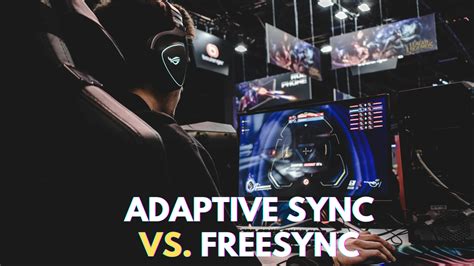
Adaptive Sync technologies like NVIDIA G-Sync and AMD FreeSync synchronize your monitor’s refresh rate with your GPU’s frame rate, eliminating screen tearing and stuttering. While generally beneficial, there are nuances for competitive play.
- When to Use It: If your frame rate frequently fluctuates below your monitor’s maximum refresh rate, Adaptive Sync provides a smoother experience without tearing.
- Competitive Consideration: Some professional players disable Adaptive Sync and cap their in-game FPS slightly below their monitor’s maximum refresh rate (e.g., 237 FPS on a 240Hz monitor) to ensure minimal input lag, even if it introduces minor tearing. This also often involves disabling V-Sync in-game and in the GPU control panel.
- Test for Yourself: Experiment with Adaptive Sync on and off in your favorite competitive titles to see which feels more responsive to your playstyle.
Fine-Tuning Picture Settings for Clarity and Visibility
Beyond performance, certain picture settings can improve visibility without adding lag.
- Brightness & Contrast: Adjust to a comfortable level that doesn’t strain your eyes but ensures clear visibility of dark areas without washing out bright ones. Overly high brightness can reveal enemies in shadows, but too much can cause eye fatigue.
- Color Calibration: While less critical than refresh rate, accurate colors can prevent eye strain and make details clearer. Use an ICC profile if available for your monitor, or manually adjust RGB values in the OSD.
- Gamma: Adjusting gamma can brighten or darken mid-tones. A slightly lower gamma (e.g., 2.0-2.2) can sometimes reveal enemies hiding in darker corners without making the entire screen too bright.
- Black Equalizer / Shadow Boost: Many gaming monitors have features that selectively brighten dark areas without overexposing brighter parts of the image. Experiment with these settings cautiously, as too much can flatten the image and make it look washed out.
Leveraging Monitor-Specific Gaming Features
Many gaming monitors include proprietary features that can be beneficial:
- Custom Crosshairs: Some monitors can overlay a hardware crosshair, which can be useful in games where the in-game crosshair is small or absent.
- Display Modes / Game Modes: Your monitor might have presets like ‘FPS Mode’ or ‘RTS Mode.’ While these can be a good starting point, they often make aggressive changes to color and contrast, so manual adjustment is usually superior for competitive edge.
Conclusion: Test, Tweak, and Dominate
Optimizing your gaming monitor for competitive FPS is a journey of understanding, adjustment, and personal preference. There’s no one-size-fits-all solution, as ideal settings can vary between games, monitors, and individual eyesight. Start by prioritizing refresh rate and response time, then fine-tune adaptive sync and picture settings. Always test your changes in-game to see their real-world impact. By meticulously configuring your display, you’ll ensure that your monitor is an asset, not a bottleneck, helping you react faster, see clearer, and ultimately, climb the competitive ranks.


