




What SSD type (NVMe/SATA) offers best gaming load times & value?
In the ever-evolving world of PC gaming, every component plays a crucial role in delivering a smooth and immersive experience. One of the most frequently debated topics among enthusiasts is storage: specifically, whether to opt for an NVMe or a SATA Solid State Drive (SSD) for the best balance of gaming load times and overall value. While both offer a massive upgrade over traditional Hard Disk Drives (HDDs), their differences in speed, cost, and technology can make the choice seem daunting.
Understanding the Contenders: NVMe vs. SATA SSDs
Before diving into performance metrics, it’s essential to understand the fundamental differences between these two storage technologies.
SATA SSDs: The Reliable Workhorse
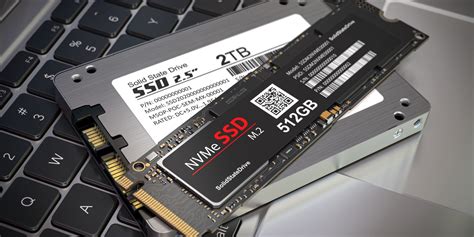
SATA (Serial ATA) SSDs were the first mainstream solid-state storage solution, largely replacing HDDs due to their superior speed and durability. They connect to your motherboard via a SATA data cable and a SATA power cable. These drives typically reach maximum sequential read/write speeds of around 550 MB/s, which is a significant leap from mechanical hard drives and more than sufficient for general computing tasks and most current gaming.
NVMe SSDs: The Speed Demon
NVMe (Non-Volatile Memory Express) is a communication protocol specifically designed for flash memory, allowing SSDs to leverage the high-speed PCIe (Peripheral Component Interconnect Express) interface. Unlike SATA drives, NVMe SSDs connect directly to the motherboard via an M.2 slot (though some can use a PCIe add-in card), bypassing the slower SATA controller entirely. This direct connection to the CPU enables staggering speeds, with Gen3 NVMe drives offering up to 3,500 MB/s and the latest Gen4 and Gen5 drives pushing past 7,000 MB/s and 10,000 MB/s respectively. This massive bandwidth makes them ideal for demanding applications like video editing, large file transfers, and potentially, future gaming.

Gaming Load Times: Is NVMe Worth the Premium?
The core of the debate for gamers revolves around load times. Theoretically, NVMe’s superior speed should translate to significantly faster game loading. However, real-world benchmarks often tell a more nuanced story.
For most modern games, the difference in load times between a high-end SATA SSD and even a fast NVMe SSD is surprisingly marginal. We’re talking about differences of a few seconds, or even fractions of a second, in many titles. This is due to several factors:
- Game Engine Limitations: Many older or even current game engines aren’t optimized to fully utilize the immense bandwidth of NVMe drives. They often load assets in smaller chunks or are bottlenecked by CPU processing or GPU rendering speeds rather than storage I/O.
- Asset Compression: Game assets are typically heavily compressed. The time it takes for your CPU to decompress these assets can be a greater bottleneck than the speed at which they’re read from storage.
- Other System Components: The overall speed of your system, including your CPU, RAM, and GPU, plays a significant role. A super-fast NVMe drive won’t magically make up for an older CPU struggling to process game data.
While NVMe does offer a definitive advantage in applications that involve constant large file transfers (like content creation, professional video editing, or handling massive databases), its impact on current game load times is often less dramatic than marketing might suggest.

The Value Proposition: Price, Performance, and Practicality
When considering value, price per gigabyte (GB) is a critical factor. Historically, SATA SSDs have been significantly cheaper than NVMe drives. While the price gap has narrowed considerably, SATA still often holds an edge, especially at higher capacities. This means you can often get more storage space for your money with a SATA SSD.
For a typical gamer, a 1TB or 2TB SATA SSD provides ample storage for a large game library at a very reasonable cost, delivering excellent performance that vastly outperforms an HDD. An entry-level NVMe drive might offer slightly faster theoretical speeds but for a noticeable price increase without a proportionally noticeable improvement in gaming experience.
However, it’s also worth noting that many modern motherboards come with M.2 slots (for NVMe drives) as standard, and often more than one. If you’re building a new PC, the convenience of a cable-free M.2 NVMe drive can be appealing, and the price difference for entry-level models might be small enough to justify the upgrade for future-proofing.

Future-Proofing Your Gaming Rig: DirectStorage and Beyond
The landscape of gaming storage is set to evolve with technologies like Microsoft’s DirectStorage, which debuted with the Xbox Series X/S and is now making its way to PC. DirectStorage allows the GPU to directly access game assets from the NVMe SSD, bypassing the CPU bottleneck for decompression and drastically reducing load times and improving asset streaming. This technology requires an NVMe SSD to function effectively.
While DirectStorage-optimized games are currently few, their numbers are expected to grow. For those looking to future-proof their gaming rig and extract every ounce of performance as new titles adopt this technology, an NVMe SSD becomes a more compelling choice.

Making Your Choice: Recommendations
Budget-Conscious Gamer
If you’re on a tight budget, a SATA SSD (e.g., 1TB or 2TB) remains an excellent choice. It provides a massive performance upgrade over an HDD for very little money and will load most games quickly enough for a satisfying experience. You can allocate the savings to a better CPU or GPU, which will likely have a more significant impact on overall gaming performance.
Performance Enthusiast
For gamers who want a good balance of performance and value, a mid-range Gen3 or Gen4 NVMe SSD (e.g., 1TB or 2TB) is often the sweet spot. It offers superior general system responsiveness, faster loading in some applications, and provides a degree of future-proofing for upcoming DirectStorage titles without breaking the bank.
Cutting-Edge & Future-Proofing
If budget is no object, or if you’re a content creator who also games, a high-end Gen4 or Gen5 NVMe SSD is the way to go. You’ll get the absolute fastest speeds available, maximizing performance in all scenarios and being fully prepared for the next generation of games optimized for DirectStorage and incredibly fast asset streaming.

Conclusion
In the present gaming landscape, the performance difference in load times between NVMe and SATA SSDs is often less impactful than many perceive, with SATA still offering tremendous value. However, the future, with technologies like DirectStorage, clearly points towards NVMe becoming increasingly essential for optimal gaming performance. For most gamers, a good quality SATA SSD provides excellent value, while an affordable NVMe drive offers a subtle boost and valuable future-proofing. Ultimately, the “best” choice depends on your specific budget, your current hardware, and how much you prioritize being at the absolute bleeding edge of technology versus getting the most bang for your buck.