





What’s the best strategy to update game reviews for significant post-launch patches/DLC?
Navigating the Evolving Landscape of Game Reviews
In today’s dynamic video game industry, where titles often evolve significantly post-launch through patches, updates, and substantial downloadable content (DLC), the traditional ‘snapshot’ review model faces a considerable challenge. A game reviewed at launch can become an entirely different beast months or even years later. For reviewers and publications, the question then arises: What’s the best strategy to keep reviews accurate, relevant, and fair when a game undergoes such transformations?

The Challenge of Perpetual Evolution
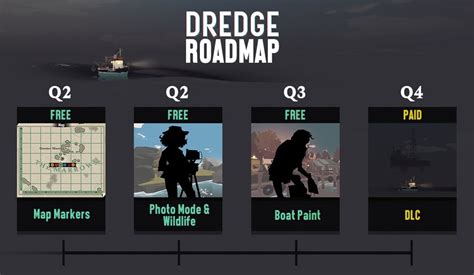
Many modern games, particularly those with live-service elements or ambitious roadmaps, are designed to grow and change. Bug fixes can iron out game-breaking issues, balance patches can reshape meta-games, and major content updates or expansions can introduce new mechanics, story campaigns, or entire regions. An initial review might accurately reflect a game’s state at release, but if that game fundamentally improves or, conversely, declines over time, the original review can quickly become misleading for new players.
Strategy 1: The ‘Living Review’ – Updating the Original Text and Score
One approach is to treat the initial review as a ‘living document’ that is directly updated. When a significant patch or DLC arrives, the original review text is edited to reflect the changes, and the score (if applicable) is re-evaluated. This method ensures all information resides in one central place, making it easy for readers to find the most current assessment. Transparency is key here: clearly mark updated sections, provide dates for revisions, and ideally include a changelog or summary of what has been altered.
Pros:
- All information consolidated in one place.
- Directly reflects the game’s current state.
- Easy for readers to find the definitive review.
Cons:
- Can erase the historical context of the game’s launch state.
- Might require extensive re-writing, potentially making the review feel disjointed.
- A rapidly changing game could lead to constant, minor updates.

Strategy 2: Append an ‘Update Section’ to the Original Review
Instead of directly modifying the original text, some publications opt to keep the launch review largely intact but append a new, clearly labeled ‘Update Section’ or ‘Post-Launch Impressions’ at the end. This section can then detail the changes introduced by patches or DLC, discuss their impact, and offer a revised verdict or addendum to the original score without erasing the initial assessment. This approach preserves the historical record while providing current information.
Pros:
- Maintains the integrity of the launch review.
- Clearly separates initial impressions from subsequent updates.
- Good for tracking a game’s evolution over time.
Cons:
- Reviews can become excessively long if there are many updates.
- Readers might not scroll to the bottom for the latest information.
- The initial score may still be the most prominent, even if superseded.
Strategy 3: Publishing a Separate ‘Re-Review’ or ‘DLC Review’
For truly transformative updates or substantial story-driven DLC that fundamentally alters the game, a completely new review might be the most appropriate strategy. This ‘re-review’ focuses on the current state of the game, treating it almost as a new release, and can be published alongside the original review. Similarly, major expansions often warrant their own dedicated review, with a discussion on how they integrate with and enhance the base game.
Pros:
- Allows for a fresh, comprehensive assessment of the updated game.
- Ideal for games that undergo massive overhauls (e.g., No Man’s Sky).
- Provides distinct coverage for major DLC, treating it as its own product.
Cons:
- Can clutter search results and confuse readers about which review is definitive.
- Requires significant new writing and editorial resources.
- Might dilute the impact of the original review.

Key Considerations for Any Strategy
Regardless of the chosen method, several universal principles should guide the process:
- Transparency: Always clearly state when a review has been updated, what changes were made, and why. Dates are crucial.
- Scope of Change: Minor bug fixes generally don’t warrant a full re-review, but a complete content overhaul might. Editors must weigh the significance of the update.
- Reader Expectations: Consider what your audience expects. Do they want a single, constantly updated source, or clear distinctions between versions?
- Resource Allocation: Re-reviewing or extensively updating content requires time and effort from writers and editors. Publications need to manage these resources effectively.
- Consistency: Establish clear internal guidelines for how and when reviews will be updated to maintain editorial standards across all titles.

Conclusion
There is no single ‘best’ strategy that fits all scenarios. The optimal approach often depends on the specific game, the magnitude of the update, and the editorial philosophy of the publication. A hybrid model, perhaps using update sections for minor patches and full re-reviews for transformative expansions, might offer the most flexibility. What remains paramount is a commitment to accuracy, transparency, and serving the reader with the most relevant information to make informed purchasing and playing decisions in an ever-evolving gaming world.



