





What’s the best way to integrate gameplay performance and platform differences into game reviews?
In the rapidly evolving world of video games, a reviewer’s role extends far beyond merely assessing gameplay mechanics and narrative. With a diverse array of gaming platforms—from high-end PCs and next-gen consoles to handhelds and cloud streaming services—understanding and communicating the technical execution of a game is paramount. Reviewers face the challenge of not only playing a game but also rigorously testing its performance and identifying how it differs across various hardware configurations. This detailed analysis helps consumers make informed purchasing decisions, ensuring they know what to expect from their chosen platform.

The Evolving Landscape of Game Performance
Gone are the days when a game simply ‘ran’ or ‘didn’t run.’ Today, performance is a spectrum, encompassing frame rates, resolutions, loading times, input lag, and the stability of the game engine. A game might offer a silky-smooth 60 frames per second on a powerful PC but struggle to maintain 30 FPS on a base console, or vice-versa with poorly optimized PC ports. Ignoring these differences leaves a significant gap in the review, potentially misleading readers who play on specific hardware. Reviewers must acknowledge that the ‘same game’ can deliver wildly different experiences depending on where it’s played.
Establishing a Standardized Approach
To effectively integrate performance and platform differences, reviewers should adopt a structured approach. This begins with dedicated testing on each major platform relevant to the game’s release. For multi-platform titles, ideally, the game should be played and evaluated on PC (with varying specs if possible), PlayStation, Xbox, and potentially Nintendo Switch or other relevant systems. Consistency in testing environments is key; using the same save files, in-game locations, and demanding scenarios across all platforms allows for direct, apples-to-apples comparisons.
Key Metrics and How to Present Them
The most crucial performance metrics include:
- Frame Rate: Quantifying average and minimum FPS, highlighting noticeable dips during intense action or busy scenes.
- Resolution: Stating the native or upscaled resolution the game targets on each platform.
- Loading Times: Comparing how long it takes to load into the game, new areas, or after death.
- Graphical Settings/Fidelity: Discussing visual compromises or enhancements unique to each platform (e.g., ray tracing on PC/next-gen, simplified textures on Switch).
- Input Lag: Subjective but important for fast-paced games; can be highlighted if particularly egregious on one platform.
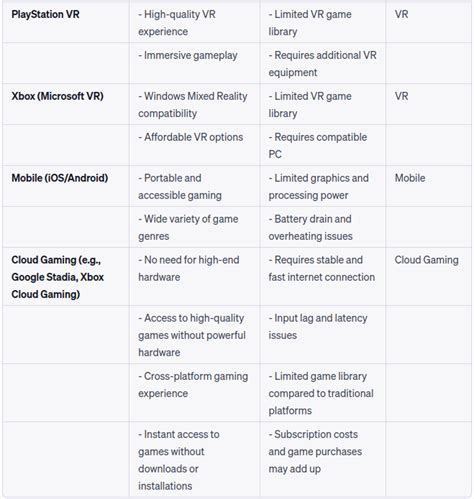
Presenting this data clearly, perhaps in a dedicated ‘Performance and Platforms’ section or a comparative table, makes it easily digestible. Visual aids like comparison screenshots or short video clips demonstrating differences can also be incredibly effective.
Beyond the Numbers: Subjective Experience and User Impact
While objective data is invaluable, it’s equally important to contextualize it within the subjective player experience. A game running at a consistent 30 FPS might feel perfectly fine for a turn-based RPG, but utterly unplayable for a competitive shooter. Reviewers should articulate how performance impacts enjoyment, immersion, and the game’s core mechanics. Does a lower frame rate make precise platforming impossible? Does stuttering break immersion during cinematic moments? Does slow loading become a frustrating barrier to entry?
Addressing PC Specifics and Scalability
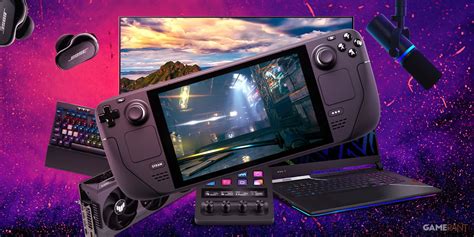
For PC titles, the discussion needs to be nuanced. A reviewer cannot test every possible hardware configuration. Instead, they should specify their test rig (CPU, GPU, RAM, storage) and evaluate the game’s scalability across different graphical presets. How well does it run on high-end, mid-range, and even lower-end settings? Are there optimization issues that plague even powerful machines? Are there a wide array of graphical options, or is the game locked down?
![How to Improve PC Performance for Gaming [Ultimate Guide]](/images/aHR0cHM6Ly90czMubW0uYmluZy5uZXQvdGg/aWQ9T0lQLmJ2LVBEMHhGTnNRZXdQY2FfXzBvMUFIYUVIJnBpZD0xNS4x.webp)
Conclusion: A Holistic View for the Modern Gamer
Integrating gameplay performance and platform differences isn’t just an added bonus; it’s a fundamental requirement for comprehensive game reviews in the modern era. By meticulously testing, clearly communicating data, and contextualizing technical performance within the player’s experience, reviewers empower readers to make informed decisions. This holistic approach not only raises the standard of game criticism but also respects the diverse technical landscapes and financial investments of today’s gaming audience, ensuring that a review truly reflects the complete picture of a game.



