



What’s the most effective way to index gaming walkthroughs for quick in-game player reference?

In the fast-paced world of video games, few things are more frustrating than being stuck and having to navigate a cumbersome walkthrough. Players need immediate answers to keep the immersion alive and the gameplay flowing. The effectiveness of a gaming walkthrough isn’t just about its comprehensiveness, but critically, its accessibility and the speed at which players can find specific information without breaking their stride. This article explores the most effective strategies for indexing gaming walkthroughs to ensure quick, in-game player reference.
The Challenge of Traditional Walkthroughs
Historically, walkthroughs have often been linear text documents or long, unsegmented videos. While thorough, these formats present significant hurdles for quick reference. Text-based guides might require endless scrolling, while video guides demand constant scrubbing to locate a particular moment or item. This interruption can pull a player out of the game’s world, making the experience disjointed. The goal of modern indexing is to overcome these limitations, providing a frictionless path from problem to solution.

Core Principles for Effective Indexing
Effective indexing for quick reference hinges on a few core principles: modularity, searchability, and contextual relevance. Content should be broken down into the smallest logical units, easily searchable, and presented in a way that directly addresses a player’s immediate need within the game. Think less like a novel and more like an interactive encyclopedia.
Key Strategies for Instant Access
Hyperlinking and Deep Linking
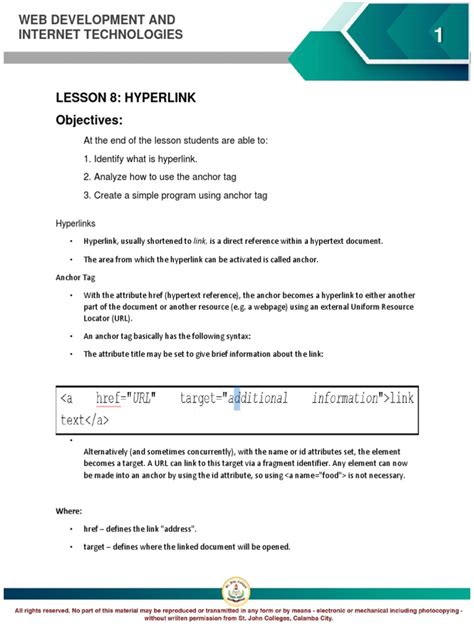
One of the most powerful tools is extensive hyperlinking. Every mention of a quest, item, character, or location should ideally link to a dedicated page or section providing more detail. For digital guides, deep linking allows direct jumps to specific paragraphs, timestamps in videos, or even exact coordinates on an interactive map. This creates a web of interconnected information, allowing players to follow tangents or jump directly to the precise data they need.
Time-Stamped Video Guides
For video walkthroughs, granular time-stamping is non-negotiable. Instead of a single video, break it into chapters with clear labels, and provide a detailed index of timestamps for key moments like boss fights, puzzle solutions, or hidden collectibles. Many video platforms now support this natively, allowing viewers to quickly navigate the video’s timeline.
Granular Categorization and Tagging
Beyond broad categories, a detailed tagging system is crucial. Content should be tagged not just by game section, but by quest name, item type, character involved, enemy encountered, puzzle type, and even specific mechanics. This allows players to filter and sort information based on what they are currently facing in the game. For example, a player looking for ‘all health upgrades in Sector B’ should be able to find that specific list instantly.

Interactive Maps and Diagrams
Visual aids are often superior to text for spatial information. Interactive maps that highlight points of interest, collectible locations, quest objectives, and secret areas, with clickable markers that link to relevant guide sections, are invaluable. Similarly, diagrams for complex puzzles or combat arenas can provide immediate clarity that paragraphs of text cannot.
Powerful Search Functionality
A robust, in-guide search engine is paramount. It should be able to search across all content – text, video descriptions, tag metadata – and offer predictive text or suggestions. The faster a player can type a query and get relevant results, the less time they spend outside the game. Implement features like fuzzy matching to account for typos or partial knowledge.

Modular Sectioning and Chapterization
Break the walkthrough into distinct, bite-sized sections or chapters. Each section should ideally focus on a single objective, area, or puzzle. This allows players to bookmark specific segments, quickly scan headings, and avoid wading through irrelevant information. Clear, concise headings and subheadings are essential for this.
User Experience (UX) Considerations
Beyond the indexing itself, the presentation layer plays a critical role. The interface should be clean, intuitive, and mobile-friendly, as many players use their phones or tablets for reference while playing on another screen. Clear typography, consistent design, and minimal distractions enhance the quick reference experience. Pop-out windows or overlays for mini-guides can also be very effective.
Conclusion
The most effective way to index gaming walkthroughs for quick in-game player reference is through a multi-faceted approach combining granular modularity, extensive internal linking, detailed categorization, powerful search capabilities, and rich interactive media like maps and time-stamped videos. Prioritizing these strategies transforms a static guide into a dynamic, responsive resource that supports players precisely when and where they need it most, enhancing their enjoyment and minimizing frustration.