What’s the optimal gaming monitor setup for competitive FPS: 144Hz vs 240Hz, G-Sync on or off?

The Quest for Competitive Edge: Monitor Choices
For competitive First-Person Shooter (FPS) players, every millisecond counts. The right monitor setup can be the difference between a headshot and being eliminated. With a plethora of options available, two debates frequently arise: the ideal refresh rate (144Hz vs. 240Hz) and whether to enable adaptive sync technologies like G-Sync. Understanding the nuances of each can significantly impact your in-game performance.
Refresh Rate Showdown: 144Hz vs. 240Hz
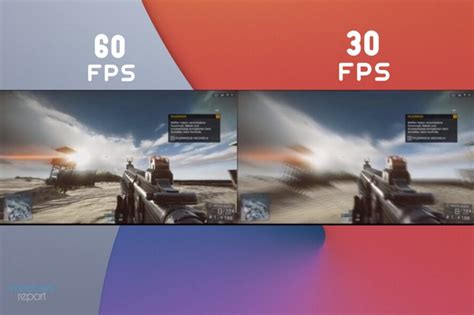
The refresh rate of a monitor dictates how many times per second the image on the screen is updated. A higher refresh rate means a smoother, more fluid visual experience, allowing you to react faster to in-game events.
144Hz: The Sweet Spot for Many
- Smoothness and Clarity: A 144Hz monitor offers a substantial upgrade over standard 60Hz displays, providing significantly smoother motion and reduced motion blur. This makes tracking fast-moving targets much easier.
- Accessibility: 144Hz monitors are more affordable and less demanding on your graphics card. Achieving a stable 144 frames per second (FPS) is achievable with a wider range of mid-to-high-tier GPUs, especially at 1080p resolution.
- Diminishing Returns Threshold: For many players, the jump from 60Hz to 144Hz is revolutionary, while the leap to 240Hz, though noticeable, offers diminishing returns in terms of perceived smoothness for the average eye.
240Hz: The Ultimate Advantage (for Some)
- Peak Responsiveness: 240Hz monitors offer the absolute smoothest visual experience currently available, providing an almost instant update of information. For elite-level players, this micro-advantage can be crucial.
- High Demands: To fully utilize a 240Hz monitor, your system must consistently output 240+ FPS. This requires a powerful CPU and GPU, especially in graphically demanding titles. Failing to hit high frame rates negates much of the benefit.
- Cost Premium: 240Hz monitors typically come at a higher price point, and the accompanying high-end hardware adds to the overall investment.
Verdict on Refresh Rate: For the vast majority of competitive players, a high-quality 144Hz (or 165Hz) monitor is more than sufficient and offers the best balance of performance and cost. If you’re a professional esports athlete with top-tier hardware, or aspire to be one, and play titles like CS:GO or Valorant where frame rates consistently exceed 300 FPS, then 240Hz might provide that extra, marginal edge.
![144Hz vs 240Hz - Which Should I Choose? [Simple Answer]](/images/aHR0cHM6Ly90czQubW0uYmluZy5uZXQvdGg/aWQ9T0lQLlBpV3BtZWtkZFdYMU15MnJnVXVZX2dIYUVPJnBpZD0xNS4x.webp)
G-Sync On or Off: The Adaptive Sync Dilemma
G-Sync (and its AMD counterpart, FreeSync) is an adaptive sync technology that synchronizes the monitor’s refresh rate with the GPU’s frame rate. This eliminates screen tearing and reduces stuttering, providing a much smoother and more visually pleasing experience, especially when frame rates fluctuate.
G-Sync On: For Visual Fidelity and Consistency
- Eliminates Tearing: The primary benefit is the complete eradication of screen tearing, where multiple frames are displayed simultaneously, creating a jagged line across the screen.
- Reduces Stutter: When your FPS drops below your monitor’s refresh rate, G-Sync ensures each frame is displayed for the correct duration, preventing noticeable stuttering.
- Smoother Experience: For games where your frame rate is inconsistent or dips below your monitor’s maximum refresh rate, G-Sync provides a consistently smooth visual experience without perceptible judder.
G-Sync Off: For Minimal Input Lag
- Lowest Input Lag: Competitive players, particularly those at the highest level, often prioritize absolute minimal input lag. While G-Sync’s input lag addition is often negligible (a few milliseconds), some pros prefer to disable it entirely to ensure the fastest possible response.
- Stable High FPS Scenario: This preference is most common among players who can consistently achieve frame rates significantly higher than their monitor’s refresh rate (e.g., 300+ FPS on a 144Hz or 240Hz monitor). In such cases, screen tearing is less noticeable, and the slight input lag from adaptive sync is considered a disadvantage.
- V-Sync Alternatives: If G-Sync is off and tearing is an issue, some players might use in-game frame rate limiters or Fast Sync (NVIDIA) as alternatives to manage tearing without the traditional V-Sync input lag.
Verdict on G-Sync: For the vast majority of players, turning G-Sync (or FreeSync) ON is recommended. The benefits of tear-free, stutter-free gameplay far outweigh the minuscule increase in input lag, which most players will not perceive. Only at the absolute pinnacle of competitive play, where every millisecond is scrutinized and frame rates are consistently maxed out, would disabling G-Sync be a considered strategy.

Beyond Refresh Rate and Adaptive Sync: Other Crucial Factors
While refresh rate and adaptive sync are critical, other monitor specifications also play a vital role in competitive FPS gaming:
Response Time (GtG)
Measured in milliseconds (ms), response time indicates how quickly a pixel can change from one color to another. For competitive FPS, a 1ms Gray-to-Gray (GtG) response time is highly desirable to minimize ghosting and motion blur, ensuring clearer images during fast movement. TN panels traditionally excel here, though fast IPS panels are catching up.
Panel Type
- TN (Twisted Nematic): Historically the king for competitive gaming due to its extremely fast response times and high refresh rate capabilities. Downsides include poorer color reproduction and viewing angles.
- IPS (In-Plane Switching): Offers superior color accuracy and wider viewing angles, making it great for general use and visually rich games. Modern fast IPS panels now boast 1ms GtG response times and high refresh rates, making them increasingly viable for competitive play.
- VA (Vertical Alignment): Generally offers a good balance of contrast and viewing angles but often lags behind TN and IPS in response times, making it less ideal for top-tier competitive FPS.
Resolution
For competitive FPS, 1080p (Full HD) is often preferred. It’s easier for GPUs to maintain high frame rates at 1080p, and the visual information density is sufficient for target acquisition without requiring excessive rendering power. While 1440p (QHD) offers sharper images, it demands significantly more GPU power to achieve competitive frame rates, potentially forcing a compromise on refresh rate or graphical settings.

Optimal Setup Recommendations
Based on these considerations, here are recommended setups for different competitive FPS players:
For the Elite Competitive Pro (Esports Level)
- Monitor: 24-inch, 1080p, 240Hz (or 360Hz), 1ms GtG TN panel.
- G-Sync/FreeSync: Off (assuming consistently maxed-out frame rates well above refresh rate).
- System: Top-tier CPU and GPU capable of pushing 300+ FPS in target games.
For the Serious Competitive Player (High-Tier Casual to Aspiring Pro)
- Monitor: 24-27 inch, 1080p or 1440p, 144Hz/165Hz, 1ms GtG Fast IPS or TN panel.
- G-Sync/FreeSync: On (for smooth, tear-free experience even with frame rate fluctuations).
- System: High-end CPU and GPU capable of consistently achieving 144+ FPS.
For the Enthusiastic Competitive Player (Balanced Performance)
- Monitor: 24-27 inch, 1080p, 144Hz, 1ms GtG IPS or TN panel.
- G-Sync/FreeSync: On.
- System: Mid-to-high-end CPU and GPU capable of maintaining 100-144 FPS.

Conclusion
The optimal gaming monitor setup for competitive FPS is a personal choice influenced by skill level, budget, and hardware. For most players, a 144Hz/165Hz monitor with a fast response time (1ms GtG), and G-Sync enabled, provides an exceptional competitive experience without the significant investment required for a 240Hz setup. Only at the very pinnacle of professional play, where every fractional advantage is sought, does disabling adaptive sync and opting for the highest refresh rate become a strategic consideration. Always prioritize stable, high frame rates first, and then choose a monitor that complements your system’s capabilities.