What’s the optimal monitor setup (refresh, resolution) for competitive FPS gaming?

The Foundation of Competitive Advantage
In the high-stakes world of competitive First-Person Shooter (FPS) gaming, every millisecond and visual detail can mean the difference between victory and defeat. Your monitor is not just a display; it’s your primary window into the battlefield, and its specifications play a crucial role in your reaction time, target acquisition, and overall situational awareness. Understanding the optimal refresh rate and resolution is paramount for any serious competitive player.
Refresh Rate: The Need for Speed
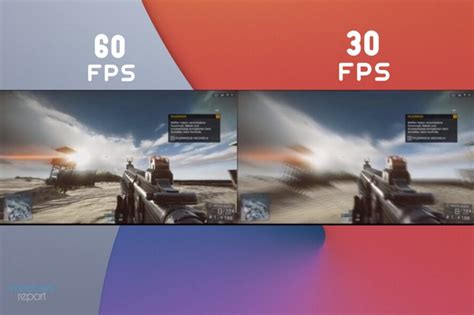
The refresh rate, measured in Hertz (Hz), dictates how many times your monitor updates the image on screen per second. A higher refresh rate means a smoother, more fluid visual experience, which is incredibly beneficial in fast-paced FPS games. Standard office monitors typically offer 60Hz, but for competitive FPS, this is a severe handicap.
144Hz: The Modern Baseline: Most competitive players consider 144Hz the minimum acceptable refresh rate. The leap from 60Hz to 144Hz is immediately noticeable, providing significantly reduced motion blur and a feeling of greater responsiveness. This allows for quicker target tracking and more precise aiming.
240Hz and Beyond: The Elite Edge: For the most dedicated and professional players, 240Hz has become the standard, with some pushing to 360Hz or even higher. While the jump from 144Hz to 240Hz might not be as dramatic as 60Hz to 144Hz, it still offers marginal improvements in smoothness and perceived input lag, potentially giving top-tier players that extra fraction of a second advantage.

Resolution: Clarity vs. Performance
Resolution refers to the number of pixels displayed on your screen, typically expressed as width x height (e.g., 1920×1080). While higher resolutions generally mean sharper images and more on-screen detail, there’s a critical trade-off for competitive FPS players: performance.
1080p (Full HD): The Performance King: For many competitive players, 1920×1080 remains the resolution of choice. The primary reason is that 1080p demands less from your graphics card, allowing you to achieve extremely high frame rates (FPS) that can fully utilize high refresh rate monitors (144Hz, 240Hz). This ensures maximum fluidity and minimal input lag.
1440p (QHD): The Balanced Middle Ground: A growing number of players are opting for 2560×1440 resolution. It offers a noticeable improvement in visual clarity over 1080p, which can make distant targets slightly easier to spot, without the extreme performance hit of 4K. If your graphics card can consistently maintain high frame rates (144+ FPS) at 1440p, it’s a fantastic option.
4K (UHD): Generally Not for Competitive FPS: While 3840×2160 (4K) offers stunning visuals, it’s rarely recommended for competitive FPS. The immense pixel count severely taxes even high-end GPUs, making it difficult to achieve the consistent high frame rates necessary for optimal competitive play. Furthermore, the smaller on-screen elements can sometimes make target acquisition more challenging, and the input lag tends to be slightly higher.
Response Time and Panel Type: Beyond the Basics
Beyond refresh rate and resolution, two other factors significantly impact your competitive edge:
- Response Time (GtG): Measured in milliseconds (ms), this indicates how quickly a pixel can change from one color to another. For competitive FPS, a 1ms Grey-to-Grey (GtG) response time is the gold standard. Slower response times can lead to noticeable ghosting or blurring, especially during fast camera movements, which hinders target tracking.
- Panel Type:
- TN (Twisted Nematic): Traditionally offered the fastest response times and highest refresh rates, making them a favorite for competitive gaming. However, they typically have poorer color reproduction and narrower viewing angles.
- IPS (In-Plane Switching): Offers superior color accuracy and wider viewing angles. Modern IPS panels have significantly improved their response times and refresh rates, making them a strong contender, often preferred for a better all-around visual experience without sacrificing much performance.
- VA (Vertical Alignment): Provides excellent contrast ratios and good black levels, often sitting between TN and IPS in terms of response time and color accuracy. While good for general gaming, they can sometimes exhibit more ghosting than TN or IPS in very fast-paced scenarios.

Adaptive Sync Technologies and Other Considerations
To further enhance the visual fluidity and eliminate screen tearing, consider monitors with adaptive sync technologies:
- NVIDIA G-Sync: Proprietary technology for NVIDIA GPUs, offering variable refresh rates to match your GPU’s output, thus eliminating tearing and stutter.
- AMD FreeSync: An open standard compatible with AMD GPUs (and often NVIDIA GPUs via ‘G-Sync Compatible’ modes), achieving the same goal of dynamic refresh rate synchronization.
Other factors to consider include monitor size (24-27 inches is common for competitive play as it keeps the entire screen easily within your field of vision), and aspect ratio (16:9 is overwhelmingly dominant for FPS gaming).

Finding Your Optimal Setup
The “optimal” monitor setup for competitive FPS gaming boils down to a balance of performance, visual clarity, and budget. Prioritize a high refresh rate (144Hz+) and a low response time (1ms GtG) above all else. Then, choose your resolution based on your graphics card’s capabilities and your personal preference for detail versus raw frame rate. For most serious competitive players, a 24-27 inch, 144Hz/240Hz, 1ms 1080p or 1440p IPS/TN monitor with adaptive sync will provide the ultimate edge.