What’s the best guide structure to find quest answers quickly, avoiding spoilers?

For many gamers, the thrill of discovery is paramount. We love the challenge, the exploration, and the satisfaction of solving a complex quest on our own. Yet, there are moments – a frustrating puzzle, a hidden objective, or a seemingly impossible boss – when a little help becomes essential. The dilemma? How do you get that vital piece of information without accidentally stumbling upon major plot twists, character fates, or the ending of the game?
The Quest for Spoiler-Free Guidance
The ideal guide structure for quick, spoiler-free answers is a delicate balance. It needs to be easily navigable, precise in its information delivery, and acutely aware of the user’s desire to only see what they need, exactly when they need it. Let’s explore several effective guide structures and features that achieve this.
Precision Lookups: Keyword & Index-Based Guides
One of the most efficient methods is a guide heavily reliant on clear headings, a comprehensive table of contents, and specific keywords. Instead of a linear ‘play-by-play’ walkthrough, these guides are structured like a reference manual.
- Detailed Table of Contents: Broken down by quest name, area, or specific objective.
- Keyword Optimization: Using exact in-game quest names, item names, and NPC names in headings and subheadings.
- Searchability: Easy to use with browser ‘Find’ functions (Ctrl+F or Cmd+F) to jump directly to the relevant section.
This approach allows a player to search for ‘Fellfang Cave Puzzle’ and immediately find a dedicated section for that specific challenge, bypassing all unrelated content.

Gentle Nudges: Hint-Based Guides
For those who want minimal intervention, hint-based guides are a lifesaver. These guides often present information in stages, revealing only a small clue at a time, allowing the player to attempt the solution before more explicit details are given.
- Tiered Hints: Starting with a vague clue, then a more direct hint, and finally the full solution.
- Expandable Sections: Using toggleable ‘spoiler’ tags or collapsible sections that reveal text only when clicked.
- Question-and-Answer Format: Posing common questions players might have and providing concise answers without preamble.
This method respects the player’s desire to solve things mostly on their own, offering just enough guidance to overcome a sticking point without giving away the farm.
Organized Progression: Sectioned Walkthroughs
While often linear, a well-sectioned walkthrough can still be spoiler-averse if designed correctly. The key is strict compartmentalization.
- Clear Quest/Chapter Delineation: Each quest or major story beat has its own dedicated, clearly labeled section.
- Minimal Introductory Text: Dive straight into the objective and solution without unnecessary lore or story recaps.
- Prerequisites & Rewards: Clearly list what’s needed to start a quest and what the rewards are, without detailing the journey itself unless it’s the focus of the section.
Users can quickly scroll to the heading that matches their current quest or location, knowing they won’t accidentally read ahead into future plot points.
Visual Clarity: Flowcharts and Decision Trees
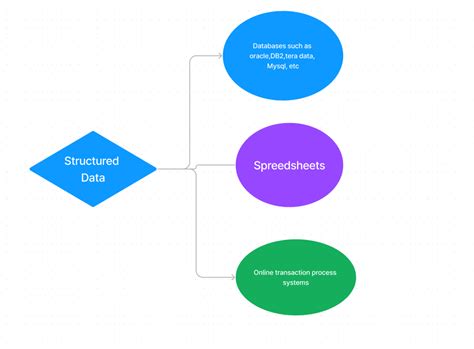
Sometimes, a picture is worth a thousand spoiler-free words. For quests involving multiple choices, branching paths, or complex puzzles, visual aids can be incredibly effective.
- Decision Flowcharts: Illustrating the consequences of choices without revealing narrative text.
- Puzzle Diagrams: Showing puzzle solutions visually (e.g., block pushing paths, lever sequences) rather than describing them.
- Annotated Maps: Highlighting specific points of interest, hidden items, or quest objectives without detailing the narrative reasons for their importance.
These graphics provide immediate answers for ‘how-to’ questions without requiring the user to read through potentially spoiler-ridden paragraphs.

Leveraging Guide Features Effectively
Beyond the structure itself, effective spoiler avoidance also depends on how a guide utilizes certain features and how the user interacts with it:
- Warning Labels: Explicit ‘SPOILER AHEAD’ warnings before sensitive sections.
- Smart Use of Bolding: Key terms, locations, and solutions bolded for quick scanning.
- Minimized Flavortext: Guides focused purely on actionable information, devoid of narrative embellishment.
- User Discipline: Players should read only the section they need, avoiding the temptation to scroll further.
A combination of these elements provides the ultimate safety net for players who value both progress and pristine discovery.
Crafting the Ideal Spoiler-Averse Guide
The best guide structure for finding quest answers quickly while avoiding spoilers often combines these strategies. It will feature a robust, searchable index for direct lookups, employ tiered hints for light nudges, clearly delineate content by quest or area, and use visual aids where appropriate. Crucially, it respects the player’s intelligence and desire for self-discovery, offering assistance as a precise tool rather than an overarching narrative.