When should I upgrade my GPU vs. CPU for better gaming performance at 1440p?

Understanding the 1440p Gaming Dilemma
Choosing between a GPU (Graphics Processing Unit) and CPU (Central Processing Unit) upgrade is a common conundrum for PC gamers, especially those targeting the sweet spot of 1440p resolution. At this resolution, the demands on your hardware significantly increase compared to 1080p, making a balanced system crucial for smooth, high-fidelity gameplay. The right upgrade depends heavily on your existing components, the games you play, and the performance bottlenecks in your current setup.

The GPU: The Core of Visual Fidelity
For most gaming scenarios, especially at higher resolutions like 1440p, the GPU is the primary component dictating your visual experience and average frame rates. Its role is to render the millions of pixels on your screen, handle complex textures, lighting, and special effects. A powerful GPU ensures you can run games at high graphical settings without significant frame rate drops.
- Resolution Scaling: At 1440p, there are 77% more pixels to render than at 1080p, placing a much heavier load on the GPU.
- Graphical Settings: Features like anti-aliasing, shadow quality, texture detail, and ray tracing are primarily GPU-bound. Pushing these to their maximum requires substantial GPU horsepower.
- VRAM Demands: Higher resolutions and texture quality demand more Video RAM (VRAM) on your GPU. If your GPU has insufficient VRAM, it can lead to stuttering as the system struggles to load assets.
The CPU: The Engine for Game Logic and Minimum FPS
While the GPU renders the graphics, the CPU handles everything else that makes a game run. This includes game logic, AI, physics calculations, draw calls (telling the GPU what to render), and managing background processes. A weak CPU can prevent even a powerful GPU from reaching its full potential, leading to lower minimum frame rates and inconsistent performance, often referred to as a CPU bottleneck.
- Frame Rate Stability: A strong CPU ensures consistent frame pacing and high minimum frame rates, preventing stutters and hitches.
- Game Physics & AI: CPU-intensive games, such as large open-world titles, strategy games, or simulations, rely heavily on the CPU to manage complex interactions.
- Background Processes: Your CPU also handles the operating system, streaming software, voice chat, and other applications running concurrently with your game.
When to Prioritize a GPU Upgrade for 1440p
You should primarily consider upgrading your GPU if:
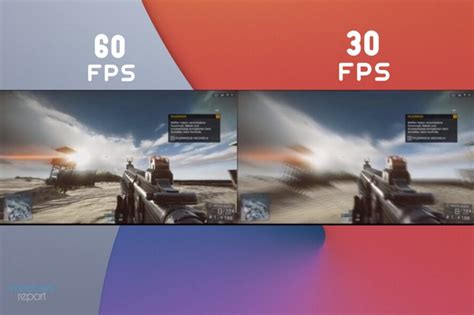
- Low Average Frame Rates: If your games generally run below your desired frame rate (e.g., consistently below 60 FPS) even at medium settings, your GPU is likely the bottleneck.
- High Graphical Settings Desired: You want to play modern AAA titles at 1440p with high or ultra settings, but your current GPU struggles to maintain acceptable frame rates.
- Older Generation GPU: You’re using a GPU that is several generations old (e.g., pre-RTX 30 series or RX 6000 series for modern 1440p gaming) that simply lacks the raw power for current titles.
- GPU Utilization is Consistently High: Monitoring tools show your GPU usage at or near 99-100% while your CPU usage is significantly lower (e.g., below 70-80%). This is a clear indicator of a GPU bottleneck.

When to Prioritize a CPU Upgrade for 1440p
A CPU upgrade becomes more critical if:
- Frequent Stuttering or Drops: You experience inconsistent frame rates, sudden drops, or micro-stutters, particularly in CPU-intensive games, even if your average FPS seems decent.
- Low Minimum Frame Rates: While your average FPS might be acceptable, the 1% and 0.1% low FPS figures are significantly lower, leading to noticeable choppiness.
- CPU-Intensive Games: You primarily play games like competitive online multiplayer titles (CS:GO, Valorant, Overwatch), large open-world RPGs, or simulation games that heavily utilize the CPU.
- High Refresh Rate Monitors: If you have a 144Hz or higher refresh rate 1440p monitor and your powerful GPU isn’t consistently hitting high frame rates (e.g., 100+ FPS), your CPU might be holding it back from generating frames fast enough.
- CPU Utilization is Consistently High: Monitoring shows your CPU usage frequently at or near 100% while your GPU usage is lower, indicating a CPU bottleneck.
![What Is A Bottleneck? [Causes & Solutions]](/images/aHR0cHM6Ly90czQubW0uYmluZy5uZXQvdGg/aWQ9T0lQLkNtTEp6aEEyMHFjLTBxZ2xENkpkT1FIYUZvJnBpZD0xNS4x.webp)
Identifying Your System’s Bottleneck
The best way to make an informed decision is to monitor your system’s performance while gaming. Tools like MSI Afterburner (with RivaTuner Statistics Server) or the in-game overlays from AMD (Adrenalin) and Nvidia (GeForce Experience) can display real-time usage for both your CPU and GPU. Observe the following:
- High GPU Usage (95-100%) and Lower CPU Usage: Your system is GPU-bound. Upgrade your GPU.
- High CPU Usage (90-100%) and Lower GPU Usage: Your system is CPU-bound. Upgrade your CPU.
- Both High: You have a well-balanced system, but both components are working hard. Consider upgrading the one that’s closer to 100% more often or the one that’s older.
Conclusion: A Balanced Approach to 1440p Upgrades
For most 1440p gaming setups, the GPU is typically the primary driver of performance. However, an aging or underpowered CPU can certainly limit even the best graphics cards, particularly in CPU-intensive titles or when aiming for very high frame rates. Monitor your system’s performance, understand the demands of your favorite games, and upgrade the component that consistently shows higher utilization or is clearly holding back your desired gaming experience. A balanced approach ensures neither component is waiting on the other, allowing your system to deliver its full potential at 1440p.