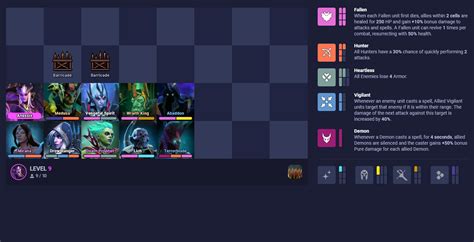
How to counter the dominant meta build after the latest balance patch?

Navigating the Post-Patch Landscape
Every balance patch brings a seismic shift to the gaming landscape. Abilities are tweaked, items are rebalanced, and suddenly, what was once optimal becomes obsolete, giving rise to new strategies and, inevitably, a dominant ‘meta’ build. This build often feels oppressive, dictating gameplay and making it difficult for diverse playstyles to thrive. The key to maintaining your competitive edge isn’t to stubbornly stick to old habits, but to adapt, analyze, and innovate.
Understanding the New Meta
Before you can counter a dominant build, you must first understand it. Identify what makes it so powerful. Is it an overpowered combination of abilities? An item that provides too much value for its cost? A character or unit whose core mechanics now synergize too well with recent changes? Spend time observing high-level gameplay, reading patch notes meticulously, and experimenting in unranked or casual modes. Pay attention to the win rates and pick rates of specific characters, items, or strategies.

Look beyond the surface; sometimes, the dominance isn’t from a direct buff but an indirect one, where other viable options were nerfed, leaving this particular build comparatively stronger. Understanding the ‘why’ behind its power is crucial for finding its ‘how’ to counter.
Deconstructing the Dominant Build: Strengths and Weaknesses
Once you’ve identified the dominant build, it’s time for a deep dive into its mechanics. List its core strengths:
- Damage Output: Is it burst, sustained, or area-of-effect?
- Survivability: Does it rely on raw health, shields, evasion, or crowd control immunity?
- Utility: Does it bring strong initiation, disengage, objective control, or vision?
- Scaling: Is it an early-game powerhouse, a late-game juggernaut, or consistent throughout?
Crucially, every strength has an inherent weakness. A build with high burst damage often lacks sustained pressure. A tanky build might lack mobility or damage. Identify these exploitable flaws. For example, if the build relies on a specific item for its power spike, consider how to delay that item or punish its owner before they acquire it. If it’s weak to crowd control, focus on compositions with heavy CC.
Developing Counter-Strategies
Direct Counters: Specific Adjustments
This involves making targeted changes to your own build, character picks, or team composition. If the meta build excels at magic damage, build magic resistance. If it’s highly mobile, pick characters with reliable point-and-click crowd control or abilities that zone effectively. Consider niche items or abilities that might have been overlooked but provide a strong counter-effect against the dominant strategy.
For instance, if the meta build thrives on healing, an item with ‘healing reduction’ becomes invaluable. If it relies on a specific channeling ability, choosing a character with a strong interrupt is a direct counter.

Indirect Counters: Playstyle and Macro Adjustments
Sometimes, simply changing your items isn’t enough; you need to change how you play. This can include:
- Aggressive Early Game: If the meta build scales into the late game, try to shut it down early with aggressive pushes and ganks.
- Defensive Stalling: If it’s an early-game bully, focus on safe farming, defensive plays, and prolonging the game until your build surpasses theirs.
- Objective Control: Prioritize map objectives that force the dominant build out of its comfort zone or deny it resources.
- Positioning: Understand the dominant build’s threat range and abilities, and position yourself to avoid its strengths while capitalizing on its cooldowns or vulnerabilities.

Adaptation and Refinement
Countering the meta isn’t a one-and-done process. The gaming community is constantly evolving, and even dominant builds can be tweaked or optimized further. Continuously monitor game data, watch professional players, and test your theories. What works in theory might not work in practice, and vice-versa. Be prepared to iterate on your counter-strategies, adjusting item timings, ability usage, and team compositions based on your experiences and results.
Share your findings with teammates and the community. Collaborative analysis often uncovers insights that a single player might miss. The goal is not just to survive the meta, but to potentially define the next one by discovering innovative counter-strategies that force others to adapt to you.
Conclusion
A new balance patch and the emergence of a dominant meta build can be frustrating, but they also present a fantastic opportunity for growth and strategic depth. By meticulously analyzing the new landscape, dissecting the dominant build’s strengths and weaknesses, and proactively developing both direct and indirect counter-strategies, you can not only survive but thrive. Embrace the challenge, adapt your gameplay, and you’ll consistently stay ahead of the curve, ready for whatever the next patch brings.