Upgrade GPU or CPU first for better gaming performance?

The Core Gaming Components: CPU vs. GPU
For PC gamers, the eternal question often boils down to which component offers the most significant performance boost: the Central Processing Unit (CPU) or the Graphics Processing Unit (GPU)? Both are critical, but their roles in gaming differ, and understanding these differences is key to making an informed upgrade decision.
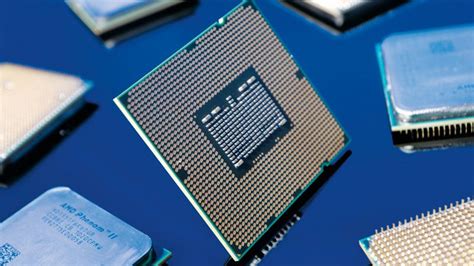
The CPU, often called the “brain” of your computer, handles a vast array of tasks. In gaming, it’s responsible for game logic, AI, physics calculations, drawing calls (telling the GPU what to render), and managing background processes. A powerful CPU ensures smooth frame delivery, especially in complex scenes with many objects or characters.
The GPU, on the other hand, is a specialized processor designed for rendering images, animations, and videos. It excels at parallel processing, making it incredibly efficient at the thousands of calculations required to display a single frame of a game. When you crank up resolutions, texture quality, or anti-aliasing, you’re primarily taxing the GPU.
When to Prioritize a GPU Upgrade
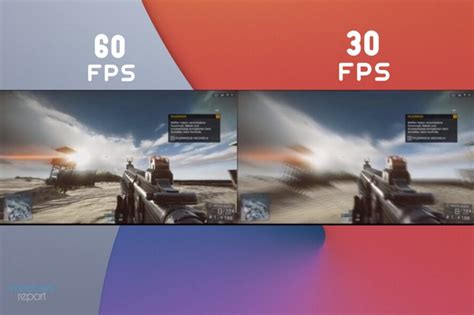
In most modern gaming scenarios, especially when targeting higher resolutions like 1440p or 4K, or maximizing graphical settings (ultra textures, complex shadows, ray tracing), the GPU is almost always the primary bottleneck. A more powerful GPU allows your system to render more frames per second at these demanding settings, resulting in smoother visuals and a more immersive experience. If you find your frame rates dropping significantly when you increase resolution or graphics presets, your GPU is likely the component holding you back.
Consider a GPU upgrade if:
- You play graphically intensive AAA titles.
- You want to game at 1440p, 4K, or higher resolutions.
- You aim for maximum graphical fidelity (ultra settings, ray tracing).
- Your current GPU is several generations old compared to your CPU.

When to Prioritize a CPU Upgrade
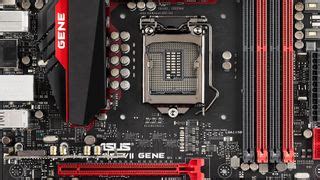
While the GPU handles the bulk of visual rendering, the CPU plays a crucial role in delivering frames to the GPU efficiently. A strong CPU is particularly important for games with complex simulations, numerous AI characters, or physics-heavy environments. It also becomes critical when you’re aiming for very high frame rates (e.g., 144Hz or 240Hz monitors), as the CPU needs to process game logic and prepare frames fast enough for the GPU to render.
Moreover, if you’re streaming your gameplay, running multiple applications in the background, or playing CPU-intensive genres like grand strategy games, open-world titles, or competitive multiplayer games where every millisecond counts, a CPU upgrade can yield noticeable benefits. A weak CPU can lead to “CPU bottlenecking,” where the GPU isn’t being fully utilized because the CPU can’t feed it data fast enough.
Consider a CPU upgrade if:
- You target very high refresh rates (144Hz+).
- You play CPU-intensive genres (open-world, strategy, simulations).
- You stream your gameplay or multitask heavily.
- Your current CPU is an older, lower-core count model struggling with modern games.

Identifying Your System’s Bottleneck
The best way to determine whether your CPU or GPU is limiting your gaming performance is to monitor their utilization while playing. Tools like MSI Afterburner, HWMonitor, or the Task Manager (Windows) can display real-time usage statistics.
How to check:
- Launch a demanding game.
- Monitor GPU usage: If your GPU usage consistently hovers around 90-100% while your frame rate is lower than desired, and your CPU usage is significantly lower (e.g., 50-70%), then your GPU is the bottleneck.
- Monitor CPU usage: If your CPU usage is consistently high (near 90-100%) and your GPU usage is much lower (e.g., 50-70%), then your CPU is the bottleneck. This often results in “stuttering” or inconsistent frame delivery even if the average FPS seems okay.
Remember that bottlenecks can shift depending on the game, resolution, and settings. A game that’s GPU-bound at 4K might become CPU-bound at 1080p with a powerful GPU and a weaker CPU.
The Importance of Balance
Ultimately, the best gaming experience comes from a balanced system where neither the CPU nor the GPU significantly bottlenecks the other. An extremely powerful GPU paired with an ancient CPU won’t perform optimally, and vice-versa. While it’s tempting to focus solely on one component, aim for a synergy that allows both to operate near their full potential for your target games and settings.
A common recommendation is to allocate a larger portion of your budget to the GPU, as it typically has a more direct impact on in-game visual fidelity and raw frame rates across a broader range of resolutions. However, ignoring a severely underpowered CPU will negate many of the benefits of a top-tier graphics card.
Conclusion
Deciding whether to upgrade your GPU or CPU first depends heavily on your current system’s specifications, your gaming habits, and your desired performance goals. For most gamers seeking higher resolutions and graphical settings, a GPU upgrade will yield the most noticeable improvements. However, if you’re chasing high refresh rates, playing CPU-intensive games, or multitasking, a new CPU might be the smarter choice. The best approach is always to monitor your system’s performance to identify the actual bottleneck, ensuring your upgrade budget is spent where it will have the greatest impact.