





What’s the best guide format for quick answers, spoiler avoidance, and update longevity?

Navigating the Labyrinth of Guide Formats
Creating a comprehensive and user-friendly guide for video games, software, or complex systems is an art form. The challenge intensifies when trying to simultaneously cater to players seeking quick answers, those meticulously avoiding spoilers, and ensuring the guide remains accurate and useful across numerous patches and updates. There’s no single perfect format, but by understanding the strengths and weaknesses of various approaches, content creators can design guides that serve their audience effectively.
The core dilemma lies in the conflicting demands. Quick answers often necessitate brevity and directness, which can inadvertently reveal plot points. Spoiler avoidance demands careful gating of information, potentially slowing down access to solutions. Update longevity requires a flexible structure that can be easily modified without a complete overhaul.

Traditional Linear Walkthroughs: Depth vs. Accessibility
Classic, linear text walkthroughs – progressing chapter by chapter, mission by mission – excel at providing in-depth detail and a narrative flow. They are fantastic for players who want to experience every facet of a game alongside a companion guide. However, their linearity makes them poor for quick answers; finding specific information often requires extensive scrolling or searching. They are also highly prone to spoilers, as progression inherently reveals plot details. Update longevity is moderate; significant game changes can necessitate large sections being rewritten or annotated.
Quick Reference Guides: Efficiency with Limitations
Formats like FAQs, item lists, crafting recipes, and skill trees prioritize quick answers. They are designed for players who know what they’re looking for and need a specific piece of data without preamble. These are excellent for spoiler avoidance if kept separate from narrative-heavy sections, allowing players to consult them only for what they need. Their modular nature also lends itself well to update longevity; specific entries can be modified or added without impacting the entire guide. The limitation is their scope – they are rarely comprehensive enough to serve as a standalone guide for complex games.

Wiki-Style Guides: Community, Longevity, and Structure
Wikis represent a powerful solution for update longevity and, when structured well, can offer quick answers. Their collaborative nature means they are often the first to be updated after a patch. Good wikis use interlinked pages, categories, and search functions to allow users to pinpoint information quickly. Spoiler avoidance is managed through dedicated spoiler sections, warnings, or separate articles for critical plot elements. However, poorly structured wikis can be overwhelming, and community contributions aren’t always consistent in quality or spoiler care.
Interactive Maps and Tools: Visual, Focused, and Spoiler-Conscious
For games with open worlds and numerous collectibles, interactive maps are invaluable. They offer immediate visual answers to location-based queries and are inherently spoiler-resistant for narrative content, as they typically focus on objective data (item locations, points of interest). Their update longevity depends on the tools used to create and maintain them, but they are generally robust for map-related changes. These are highly specialized, though, and can’t cover narrative or mechanic explanations.
Video Guides: Visual Clarity, Update Challenges
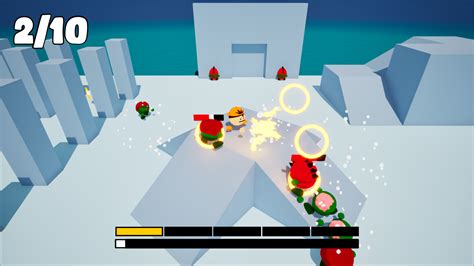
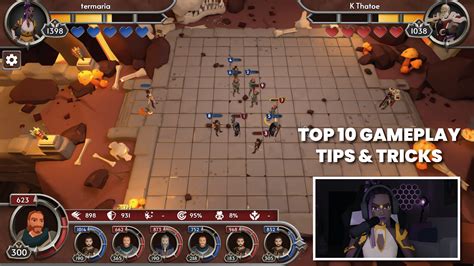
Video guides excel at demonstrating complex mechanics or specific sequences of actions that are difficult to explain in text. They offer immediate visual clarity. However, they are often poor for quick answers in a textual sense; users must watch through segments to find information. Spoiler avoidance is difficult as the visual medium can’t easily hide progression. Most significantly, video guides are notoriously bad for update longevity; even minor game changes can render entire sections inaccurate, requiring new recordings and significant effort to maintain.
Hybrid Approaches for Optimal Balance
The most effective guide formats often employ a hybrid strategy, combining the strengths of several approaches. This might look like:
- Modular Text Guides: A main walkthrough with clear spoiler warnings, supplemented by separate, hyperlinked quick-reference sections (FAQs, item lists, boss strategies) for specific, spoiler-free answers.
- Wiki-Based Hubs: A central wiki platform that links to detailed narrative walkthroughs, quick reference tables, and even embedded video tutorials for specific complex actions.
- Interactive Map Integration: A core guide that references and links to an external interactive map for collectible locations, allowing the main guide to focus on narrative and mechanics.
Crucially, effective guides must use clear labeling, a robust search function, and consistent formatting to empower users to find exactly what they need, exactly when they need it, without unwanted disclosures. Version control and clearly marked update logs are also essential for longevity.
Conclusion: User-Centric and Adaptable Design
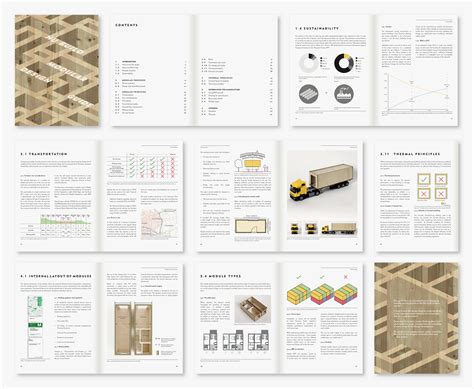
Ultimately, the “best” guide format is one that is designed with its specific audience and game in mind, prioritizing user experience above all else. For a single-player, story-rich RPG, a well-structured modular text guide with strong spoiler warnings might be ideal. For a constantly evolving online multiplayer game, a wiki-style database with integrated quick-reference tables and community contributions offers superior longevity and rapid information retrieval. By focusing on adaptability, clear segmentation, and robust navigation, guide creators can craft resources that truly stand the test of time and player demands.



