Best budget GPU for 1080p gaming at 144Hz?

The Quest for Smooth 1080p 144Hz Gaming on a Budget
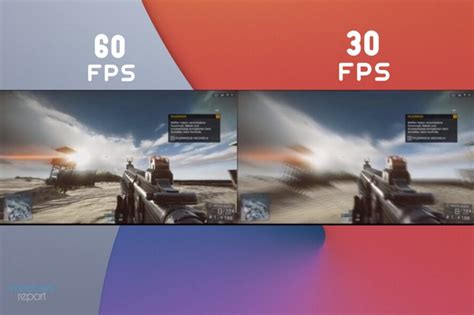
Achieving a smooth 144 frames per second (fps) at 1080p resolution is the dream for many PC gamers, offering a significantly more fluid and responsive experience than standard 60Hz. The good news is that this performance tier is increasingly accessible without breaking the bank. The challenge lies in identifying the graphics card that offers the best value, balancing raw power with an affordable price tag.
When we talk about ‘budget’ for this target, we’re generally looking at GPUs in the $200-$350 range, though prices fluctuate. The goal is to consistently hit frame rates above 100fps, ideally closer to 144fps, in popular esports titles and at least 60-80fps in more demanding AAA games at medium to high settings.
Top Contenders: AMD Radeon Graphics Cards
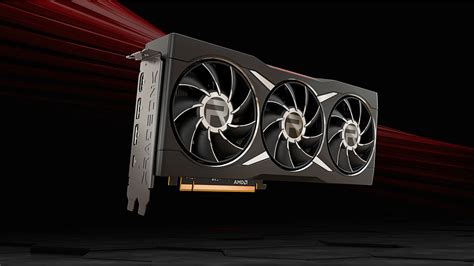
AMD has been a strong player in the mid-range market, offering excellent performance per dollar, especially for 1080p gaming. Their cards often come with generous VRAM capacities, which is a significant advantage for modern titles.
AMD Radeon RX 6600 XT / RX 6650 XT
- The Sweet Spot: These cards are often cited as prime candidates for 1080p 144Hz gaming on a budget. The RX 6600 XT, and its slightly faster refresh, the RX 6650 XT, deliver solid frame rates in a wide variety of games.
- Performance: Expect to hit 144fps easily in esports titles like CS:GO, Valorant, and Rocket League, and comfortably above 60fps, often reaching 80-100+fps, in more graphically intensive games at high settings.
- VRAM: Both come with 8GB of GDDR6 VRAM, which is sufficient for 1080p gaming for the foreseeable future.
- Value: Frequently found at very competitive prices, making them excellent budget choices.
AMD Radeon RX 6700 (Non-XT) / RX 6700 XT
- Step Up in Performance: If your budget allows for a little more, the RX 6700 (especially the 10GB version) or the RX 6700 XT offers a noticeable boost in performance.
- Performance: The RX 6700 XT, in particular, can often push towards 100-120fps in many AAA titles at high settings, making it a truly formidable 1080p 144Hz card. The non-XT RX 6700 (10GB) sits comfortably between the 6600 XT and 6700 XT.
- VRAM: The RX 6700 10GB and RX 6700 XT 12GB provide ample VRAM, future-proofing against increasingly demanding textures.
- Consideration: These might push the upper limit of what some consider ‘budget,’ but they offer exceptional long-term value.
AMD Radeon RX 7600
- Current Generation Option: As AMD’s entry-level RDNA 3 card, the RX 7600 offers competitive performance, often on par with or slightly better than the RX 6600 XT/6650 XT.
- Performance: Delivers excellent 1080p performance, making it a strong contender for 144Hz in many titles.
- VRAM: 8GB GDDR6, standard for this segment.
- Value: Its price point often makes it directly comparable to older generation cards, so comparing current deals is crucial.
Top Contenders: NVIDIA GeForce Graphics Cards
NVIDIA also offers compelling options, often with stronger ray tracing performance and DLSS (Deep Learning Super Sampling) technology, which can significantly boost frame rates in supported titles.
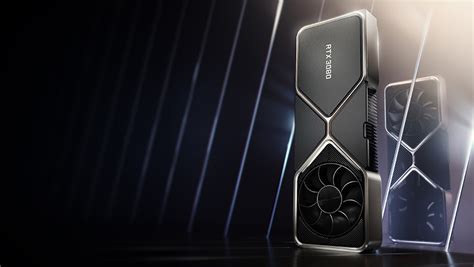
NVIDIA GeForce RTX 3060 (12GB)
- The Workhorse: The RTX 3060 with 12GB of VRAM is a very popular choice for 1080p gaming. Its generous VRAM is a significant plus for current and future titles.
- Performance: Offers excellent 1080p performance, generally falling between the RX 6650 XT and RX 6700 XT. It handles esports titles with ease and delivers strong 60-90+fps in most AAA games at high settings, often allowing for higher frame rates with DLSS enabled.
- Features: Benefits from NVIDIA’s strong ray tracing capabilities (though 1080p ray tracing at 144Hz on a budget is a stretch) and the excellent DLSS upscaling technology.
- Value: Can sometimes be found at prices similar to the AMD alternatives, especially during sales.
NVIDIA GeForce RTX 4060
- Newer Generation: While often criticized for its modest generational performance uplift, the RTX 4060 is a capable 1080p card.
- Performance: Generally performs on par with or slightly better than an RTX 3060 in rasterization, but its advantage comes from DLSS 3 Frame Generation in supported titles, which can significantly boost frame rates.
- VRAM: 8GB GDDR6, which is adequate for 1080p.
- Consideration: Its narrow 128-bit memory bus can be a bottleneck in some scenarios. The price-to-performance ratio needs careful consideration against older generations.
NVIDIA GeForce RTX 2060 SUPER (Used Market)
- Used Market Gem: For those comfortable buying used, an RTX 2060 SUPER can be an incredible value.
- Performance: Offers performance roughly equivalent to an RTX 3050 or slightly better, often hitting the 60-90fps mark in AAA games at high settings and easily clearing 144fps in esports.
- VRAM: 8GB GDDR6.
- Value: Can be found at significantly lower prices than new cards, making it a very strong budget option if you can find a reliable seller.
Performance Overview and Value Comparison
When comparing these cards, consider their typical average frame rates in a mix of games. For 1080p 144Hz, you want a card that can consistently deliver well over 100fps in esports and lighter titles, and at least 60-80fps in demanding AAA games to ensure a smooth experience even during intense moments.
- Best Overall Value (New): AMD RX 6650 XT or RX 6700 (10GB) often lead here.
- Best NVIDIA Value (New): RTX 3060 12GB for its VRAM and DLSS.
- Best Budget (Used): RTX 2060 SUPER offers excellent performance for its price.
While ray tracing is available on RTX cards and newer RDNA 2/3 cards, don’t expect 144Hz performance with ray tracing enabled on a budget card at 1080p. It’s best reserved for lower frame rates or non-RTX gaming.
Factors to Consider Beyond the GPU
Your GPU isn’t the only component that determines your gaming experience. Several other factors play a crucial role:
- CPU Pairing: A powerful GPU needs a capable CPU to feed it frames. For 1080p 144Hz, an Intel Core i5 (10th gen or newer) or AMD Ryzen 5 (3000 series or newer) is generally recommended to avoid CPU bottlenecks.
- RAM: 16GB of DDR4 RAM (3200MHz or faster) is the standard for modern gaming.
- Monitor: Ensure your monitor is actually 144Hz or higher and has either FreeSync (for AMD) or G-Sync (for NVIDIA/some FreeSync compatible monitors) for tear-free gaming.
- Game Settings: Don’t be afraid to tweak settings. Dropping a few demanding options like shadow quality or anti-aliasing from ‘Ultra’ to ‘High’ can yield significant FPS gains with minimal visual impact.
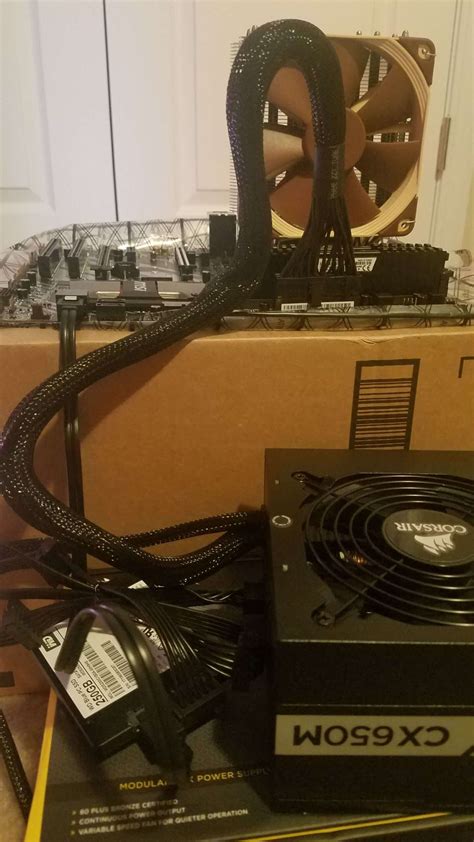
- Power Supply (PSU): Make sure your PSU has enough wattage and the correct connectors for your chosen GPU. Most of these cards require a 550W-650W PSU.

Conclusion: Making Your Choice
For the best budget GPU for 1080p 144Hz gaming, the AMD Radeon RX 6650 XT, RX 6700 (10GB), and NVIDIA GeForce RTX 3060 (12GB) stand out as excellent new options. If you’re willing to explore the used market, an RTX 2060 SUPER can offer phenomenal value.
Ultimately, the best choice depends on your specific budget, current market prices, and whether you prioritize raw rasterization performance, VRAM capacity, or features like DLSS/FSR. Whichever you choose, any of these cards will provide a fantastic foundation for a high-refresh-rate 1080p gaming experience without emptying your wallet.