





Which monitor specs (refresh rate, resolution) matter most for competitive gaming?
For aspiring esports champions and seasoned competitive gamers, every millisecond and visual detail can mean the difference between victory and defeat. When choosing a monitor, two specifications frequently dominate the discussion: refresh rate and resolution. While both contribute to the overall gaming experience, their relative importance for competitive play often sparks debate. This article will dissect these crucial specs to help you understand which truly provides the edge in fast-paced, high-stakes gaming.

The Power of Fluidity: Understanding Refresh Rate
Refresh rate, measured in Hertz (Hz), indicates how many times per second your monitor can update the image displayed on its screen. A 60Hz monitor refreshes 60 times per second, while a 144Hz monitor refreshes 144 times per second, and so on. For competitive gaming, a higher refresh rate is almost universally preferred.
The primary benefit of a high refresh rate is smoother motion. In fast-paced games like first-person shooters (FPS) or racing titles, this translates to less motion blur, clearer enemy outlines during quick camera movements, and a more responsive feel. This improved visual clarity allows players to track targets more accurately, react faster to on-screen events, and experience less input lag, directly impacting performance.
While 60Hz was once the standard, competitive gamers now often aim for 144Hz as a minimum, with 240Hz and even 360Hz becoming increasingly common among professionals. The difference between 60Hz and 144Hz is stark and immediately noticeable, offering a significant competitive advantage. The jump from 144Hz to 240Hz, while still beneficial, is often less dramatic for the average player but can provide a subtle edge for top-tier competitors.
The Clarity of Detail: Understanding Resolution
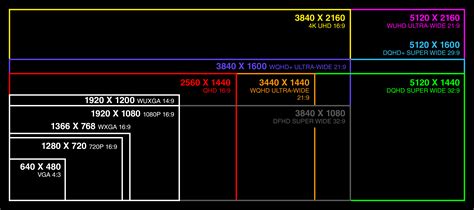
Resolution refers to the number of individual pixels displayed on a screen, typically expressed as width x height (e.g., 1920×1080 for Full HD, or 2560×1440 for QHD). A higher resolution means more pixels, resulting in a sharper, more detailed image.
In competitive gaming, higher resolution can offer improved visual fidelity, making distant objects or enemies appear clearer. This might theoretically help in spotting foes from afar or appreciating intricate map details. However, there are significant trade-offs. Running games at higher resolutions (like 1440p or 4K) demands substantially more processing power from your graphics card (GPU). If your GPU can’t consistently maintain high frame rates at a higher resolution, you negate any potential visual advantage and introduce stuttering or lower frame rates, which are detrimental to competitive play.
Furthermore, the physical size of your monitor and your viewing distance also play a role. On a smaller monitor (e.g., 24-inch) at a typical desk viewing distance, the difference between 1080p and 1440p might be less impactful than you’d expect, especially when the action is moving rapidly.
The Competitive Edge: Refresh Rate vs. Resolution
When it comes to competitive gaming, most experts and professional players agree: refresh rate trumps resolution. The ability to see smoother motion, react quicker, and reduce input lag provides a far more tangible and consistent advantage than slightly sharper visuals.
Imagine a scenario where you’re playing a fast-paced shooter. A monitor with a high refresh rate (e.g., 144Hz) will display more frames per second, meaning you see enemy movements earlier and more clearly as they traverse your screen. This direct impact on reaction time and tracking accuracy is invaluable. On the other hand, while a higher resolution might make a distant enemy’s texture look better, if your frame rate drops because of it, or if the motion is jerky, you’re at a disadvantage.
For competitive play, consistent high frame rates (matching or exceeding your monitor’s refresh rate) are paramount. It’s better to run a game at 1080p and consistently hit 144+ FPS on a 144Hz monitor than to struggle for 60 FPS at 1440p on the same monitor. The visual clarity offered by higher resolution is often secondary to the responsiveness and fluidity provided by a high refresh rate.

Beyond the Big Two: Other Critical Monitor Specs
While refresh rate and resolution are key, other specifications also contribute to a superior competitive gaming experience:
- Response Time (GtG / MPRT): Measures how quickly a pixel can change from one color to another. Lower response times (1ms GtG is ideal) minimize ghosting and motion blur, further enhancing visual clarity in fast-moving scenes.
- Input Lag: The delay between an action (e.g., mouse click) and that action appearing on screen. Monitors with low input lag are crucial for competitive play, as even a few milliseconds can be noticeable.
- Panel Type (TN, IPS, VA): TN panels traditionally offer the fastest response times and refresh rates, making them a favorite for esports, though they have poorer color reproduction and viewing angles. IPS panels offer excellent colors and viewing angles with increasingly competitive response times. VA panels provide good contrast but can suffer from slower response times and ghosting.
- Adaptive Sync (G-Sync/FreeSync): These technologies synchronize the monitor’s refresh rate with the GPU’s frame rate, eliminating screen tearing and reducing stutter, which can be invaluable for maintaining smooth gameplay even when frame rates fluctuate.
Finding Your Competitive Balance
For the vast majority of competitive gamers, the priority should be a high refresh rate monitor (144Hz or 240Hz) combined with a low response time and minimal input lag. 1080p resolution remains the gold standard for competitive esports due to its lower GPU demand, allowing for consistent high frame rates.
If you have a powerful gaming PC that can consistently push very high frame rates at 1440p (e.g., 144+ FPS), then a 1440p 144Hz/240Hz monitor can offer a fantastic blend of visual fidelity and competitive performance. 4K resolution, while visually stunning, is generally not recommended for competitive gaming due to its extremely high performance demands, which make achieving high, consistent frame rates challenging even with top-tier hardware.
Ultimately, invest in a monitor that allows your system to deliver consistent, high frame rates corresponding to the monitor’s refresh rate. This synergy is where true competitive advantage is forged.
Conclusion
In the high-stakes world of competitive gaming, every advantage counts. While both refresh rate and resolution contribute to the gaming experience, the data and professional consensus overwhelmingly point to refresh rate as the more critical specification for gaining a competitive edge. Prioritizing a monitor with a high refresh rate (144Hz+), low response time, and minimal input lag, typically at 1080p resolution, will provide the most significant boost to your performance and reaction capabilities, ensuring you’re always one step ahead of the competition.


