What’s the best GPU upgrade for 1440p gaming on a mid-range PC?

Unlocking 1440p Gaming on Your Mid-Range Rig
Stepping up from 1080p to 1440p gaming offers a significant visual upgrade, bringing sharper images and more immersive experiences. However, pushing more pixels demands a more powerful graphics card. For those with a mid-range PC, the challenge is finding the optimal GPU that won’t create a bottleneck with your existing components, fits your budget, and delivers excellent performance without requiring a complete system overhaul.
Defining Your “Mid-Range PC”
Before diving into GPU recommendations, let’s establish what generally constitutes a “mid-range” PC for the purpose of this upgrade guide. Typically, we’re looking at systems featuring:
- CPU: An Intel Core i5 (10th gen or newer, e.g., i5-10600K, i5-12400F) or AMD Ryzen 5 (3000 series or newer, e.g., Ryzen 5 3600, Ryzen 5 5600X). These CPUs are generally capable of keeping up with modern mid-to-high-end GPUs at 1440p.
- RAM: 16GB of DDR4 RAM (3200MHz or faster) or 16GB of DDR5 RAM.
- Motherboard: A compatible motherboard for your CPU.
- Power Supply: A 650W to 750W 80 Plus rated PSU is often a good baseline, but specific GPU recommendations will require checking their power draw.
If your system falls significantly below these specifications, you might encounter CPU bottlenecks, limiting the performance of a high-end GPU upgrade.

Key Considerations Before Your GPU Upgrade
A GPU upgrade isn’t just about slotting in a new card. Several factors need careful attention to ensure a smooth transition and optimal performance:
- CPU Bottleneck: While 1440p is more GPU-bound than 1080p, a significantly older or weaker CPU can still limit your new GPU’s potential. Use online bottleneck calculators as a rough guide, but real-world gaming benchmarks are more accurate.
- Power Supply Unit (PSU): Check the recommended PSU wattage for your desired GPU. Undersizing your PSU can lead to instability or system shutdowns. Always aim for a little headroom.
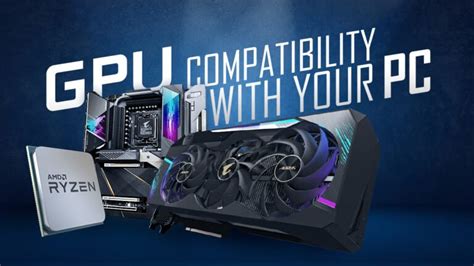
- Case Size & Clearance: Modern GPUs can be quite large. Measure the available space in your PC case to ensure the card will physically fit. Also, check for adequate airflow.
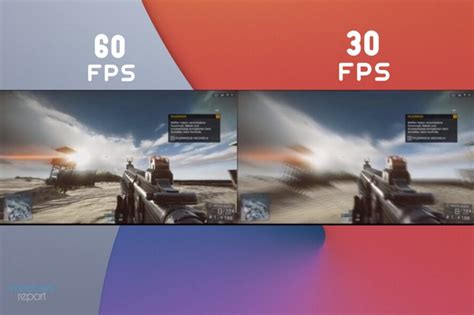
- Monitor Refresh Rate: Are you targeting 60Hz or 144Hz (or higher) at 1440p? This significantly impacts the GPU power you’ll need. Higher refresh rates demand more frames per second, requiring a more capable card.
- Budget: This is often the primary driver. We’ll explore options at different price points.
Top GPU Recommendations for 1440p Gaming
Balancing price, performance, and compatibility with a mid-range system, here are the leading contenders for your 1440p GPU upgrade:
The Sweet Spot: Excellent 1440p Performance
These cards offer the best balance of performance and value for smooth 1440p gaming, often hitting high refresh rates in many titles, especially with upscaling technologies like DLSS or FSR.
- AMD Radeon RX 7800 XT: Often lauded as the king of 1440p value, the RX 7800 XT delivers exceptional rasterization performance, often matching or exceeding the RTX 4070 in traditional games. With 16GB of VRAM, it’s well-prepared for future titles and higher texture settings. Its power draw is manageable for most 700-750W PSUs.
- NVIDIA GeForce RTX 4070 SUPER: This is NVIDIA’s strong contender in the 1440p segment. It offers excellent rasterization performance, superior ray tracing capabilities compared to the 7800 XT, and access to NVIDIA’s mature DLSS (Deep Learning Super Sampling) technology and Frame Generation, which can significantly boost frame rates. It typically consumes less power than the 7800 XT.
Solid 1440p Entry: Budget-Conscious Options
If your budget is tighter or your existing CPU is on the lower end of the “mid-range” spectrum, these cards can still provide a good 1440p experience, especially if you’re willing to tweak settings or rely more heavily on upscaling.
- AMD Radeon RX 7700 XT: A step down from the 7800 XT, this card still offers strong 1440p performance, particularly in non-ray tracing heavy games. With 12GB of VRAM, it’s a solid choice for those looking to save a bit more.
- NVIDIA GeForce RTX 4060 Ti (16GB variant): While its rasterization performance for the price can be debated against AMD alternatives, the 16GB VRAM model of the 4060 Ti offers more future-proofing than the 8GB version. It benefits greatly from DLSS and Frame Generation, making it a viable option for those prioritizing NVIDIA’s ecosystem and features, but often at a higher cost-per-frame than the RX 7700 XT.
What About High-End 1440p?
For those with a slightly more robust mid-range PC (e.g., a newer Ryzen 5 or Core i5/i7) and a larger budget, stepping up to an NVIDIA RTX 4070 Ti SUPER or AMD RX 7900 XT can unlock even higher frame rates, better ray tracing performance (especially the 4070 Ti SUPER), and more headroom for future titles. However, these cards start to push the definition of a “mid-range PC” upgrade, potentially demanding a better CPU and a more powerful PSU.
Conclusion: Choose Wisely for Your Rig
The best GPU upgrade for 1440p gaming on your mid-range PC largely depends on your specific budget and existing system components. For the vast majority, the AMD Radeon RX 7800 XT offers unparalleled rasterization performance and VRAM for its price, making it an outstanding value. If NVIDIA’s superior ray tracing, DLSS, and Frame Generation are priorities, the RTX 4070 SUPER is an excellent, albeit slightly pricier, alternative. Always double-check your PSU, case clearance, and CPU compatibility to ensure a smooth upgrade path and an incredible 1440p gaming experience.