



Best GPU upgrade for 1440p gaming? Maximize FPS on a budget build.

Unlocking 1440p Gaming on a Budget Build
Stepping up to 1440p resolution for gaming offers a significant visual upgrade over 1080p, providing crisper images and a more immersive experience. However, achieving smooth frame rates at this resolution typically demands a more powerful graphics card, which can be a challenge for those on a tight budget. The good news is that with careful selection and understanding of the market, you can find an excellent GPU that delivers a fantastic 1440p gaming experience without emptying your wallet. This guide will help you navigate the options and maximize your FPS.
The Demands of 1440p Gaming
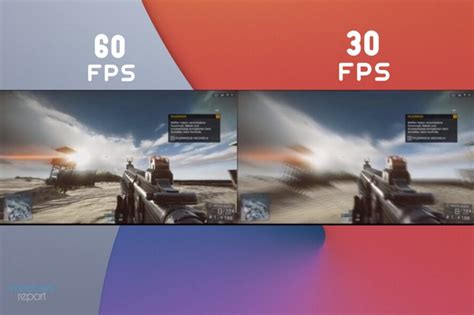
While 1080p requires roughly 2 million pixels, 1440p pushes that to 3.68 million – an 80% increase. This higher pixel count means your graphics card has to work considerably harder. To maintain playable and enjoyable frame rates (ideally 60 FPS or higher, especially for high refresh rate monitors), you’ll need a GPU with sufficient processing power and, crucially, ample VRAM. Modern games with high-resolution textures can quickly consume 8GB or more of VRAM at 1440p.

Key Considerations for a Budget 1440p GPU Upgrade
Before diving into specific recommendations, let’s consider a few vital factors that will influence your choice and overall system performance:
- VRAM (Video Random Access Memory): For 1440p, aim for at least 8GB of VRAM. Many newer titles can benefit from 12GB, especially with high texture settings.
- Power Supply Unit (PSU): Ensure your existing PSU has enough wattage and the necessary PCIe power connectors for the new GPU. Underpowering can lead to instability or system damage.
- CPU Bottleneck: While the GPU is paramount for 1440p, a very old or weak CPU might limit the potential of even a powerful new graphics card. Aim for a balanced system.
- Case Airflow: More powerful GPUs generate more heat. Good case airflow is essential to prevent thermal throttling and maintain performance.
- Monitor Refresh Rate: If you have a 144Hz or higher 1440p monitor, you’ll want a GPU capable of pushing frame rates well beyond 60 FPS to fully utilize it.

Top Budget-Friendly GPU Recommendations for 1440p
The “budget” sweet spot for 1440p gaming often lies in the mid-range new cards or last-generation high-end cards found on the used market. Here are some strong contenders:
AMD Options: Excellent Value and VRAM
- AMD Radeon RX 6700 XT: Often available new at attractive prices, the RX 6700 XT with 12GB of VRAM is a fantastic performer for 1440p at high settings. It offers excellent raw performance for its price point.
- AMD Radeon RX 6800 / RX 6800 XT (Used): If you’re comfortable with the used market, these last-gen powerhouses offer superb 1440p performance, often matching or exceeding newer mid-range cards, especially the RX 6800 XT with its 16GB VRAM.
- AMD Radeon RX 7700 XT: A newer option, the RX 7700 XT with 12GB VRAM is a strong competitor, delivering solid 1440p performance with modern features and improved efficiency.
Nvidia Options: Strong Ray Tracing and DLSS
- Nvidia GeForce RTX 3060 Ti / RTX 3070 (Used): On the used market, an RTX 3060 Ti or RTX 3070 can be excellent finds. They offer strong 1440p performance, especially with DLSS enabled, and good ray tracing capabilities for their generation.
- Nvidia GeForce RTX 4060 Ti (8GB/16GB): While the 8GB version faces some VRAM limitations in future-proofing, the 16GB model (if available within budget) offers better longevity. The RTX 4060 Ti delivers good 1440p performance, benefiting greatly from DLSS 3 frame generation in supported titles.

Maximizing FPS with Your New GPU
Simply installing a new GPU isn’t always enough; proper optimization can squeeze even more performance out of your budget build:
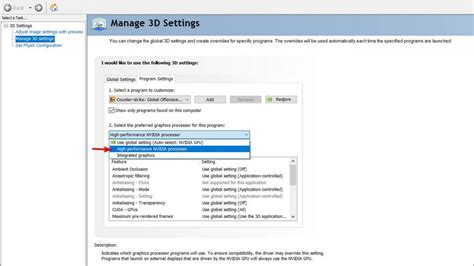
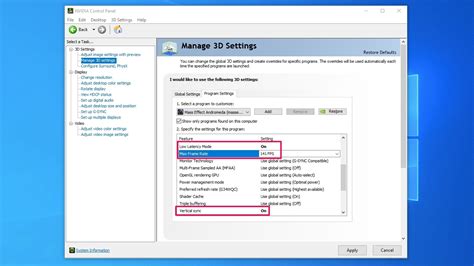
- Driver Updates: Always ensure your graphics drivers are up-to-date. Both AMD and Nvidia frequently release optimized drivers for new games.
- In-Game Settings: Experiment with settings. Often, reducing demanding settings like shadows, volumetric clouds, or anti-aliasing (if not using DLSS/FSR) from “Ultra” to “High” has minimal visual impact but significant FPS gains.
- Upscaling Technologies (DLSS/FSR): Utilize Nvidia’s DLSS (Deep Learning Super Sampling) or AMD’s FSR (FidelityFX Super Resolution). These technologies render the game at a lower resolution and then intelligently upscale it to 1440p, providing a massive FPS boost with minimal perceived visual degradation.
- Monitor Settings: Ensure your monitor is set to its native 1440p resolution and desired refresh rate in your operating system’s display settings and in-game.

Conclusion: Smart Upgrades for 1440p Glory
Upgrading your GPU for 1440p gaming on a budget build is entirely achievable with the right strategy. Focus on a card with adequate VRAM (at least 8GB, preferably 12GB+), ensure your power supply can handle it, and don’t shy away from the used market for excellent value. By combining a powerful budget-friendly GPU with smart in-game settings and leveraging upscaling technologies like DLSS or FSR, you can transform your gaming experience and enjoy smooth, beautiful 1440p visuals without overspending. Happy gaming!