How to effectively re-review evolving live-service games?

The gaming landscape has dramatically shifted with the prevalence of live-service titles. Unlike traditional, static releases, these games are designed to evolve continuously, receiving frequent updates, expansions, and overhauls. This presents a unique challenge for game reviewers: how can an initial review remain relevant when the game itself is a moving target? The answer lies in the strategic implementation of re-reviews, a vital process for maintaining journalistic integrity and providing accurate, up-to-date guidance to consumers.
The Dynamic Nature of Live-Service Gaming
Live-service games, from MMOs and battle royales to persistent online experiences, are characterized by their ongoing development cycle. Post-launch content, balance patches, seasonal events, and even fundamental gameplay changes are commonplace. A game that launched in a rough state might transform into a masterpiece years later, just as a critically acclaimed launch might devolve due to poor updates or predatory monetization. An initial review, no matter how thorough, can quickly become an outdated artifact, potentially misleading new players about the current state of a title.
Why Re-Reviewing Becomes Essential
The primary motivation for re-reviewing is accountability. As critics, our role is to inform and guide potential buyers. When a game changes significantly, that guidance must adapt. Ignoring these changes would be a disservice to the audience. Re-reviews aren’t just about assigning a new score; they’re about chronicling a game’s journey, highlighting improvements or regressions, and assessing whether a title has finally lived up to its potential or fallen from grace. This process also acknowledges the significant investment players make, not just financially, but in their time and emotional engagement.
Key Challenges in Re-Reviewing Dynamic Titles
Re-reviewing isn’t without its difficulties. The sheer volume of live-service games means keeping up with every major patch for every title is a gargantuan task. Deciding when an update warrants a re-review versus a simple follow-up piece requires careful consideration. Furthermore, the scope of a re-review can be tricky; should it re-evaluate the entire game from scratch, or focus solely on the changes? Time commitment, potential ‘review fatigue’ for both critics and readers, and the continuous nature of updates mean that even a re-review can quickly become obsolete if not framed correctly.

Strategies for Effective Live-Service Game Re-Reviews
To navigate these complexities, a structured approach is vital. Effective re-reviews are deliberate, focused, and provide clear context for their existence.
1. Define Clear Re-Review Triggers
Establish criteria for when a re-review is necessary. This could include major expansions, significant game system overhauls, a complete monetization model change, or consistent developer updates that drastically alter the player experience. Not every patch warrants a full re-review; focus on updates that genuinely transform the game.
2. Adopt a “Snapshot” Approach
A re-review should explicitly state the version or update it’s assessing. Treat it as a ‘snapshot’ of the game’s current state. This manages reader expectations, acknowledging that the game may continue to change, and provides a clear point of reference.
3. Contextualize the Original Review
Always reference the initial review, its score, and its core criticisms or praises. This helps readers understand the game’s evolution and what specific aspects have improved or worsened. It tells a cohesive story of the game’s development.
4. Focus on Impact, Not Just Features
Beyond simply listing new features, analyze their impact on the game’s core loop, player enjoyment, progression, and overall value proposition. Does the new content meaningfully enhance the experience, or does it feel tacked on?
5. Consider Community Sentiment
While a re-review is an individual critical assessment, acknowledging prevailing community sentiment (e.g., via forums, social media, player counts) can provide valuable context, especially regarding developer responsiveness and player satisfaction.
Structuring a Comprehensive Re-Review
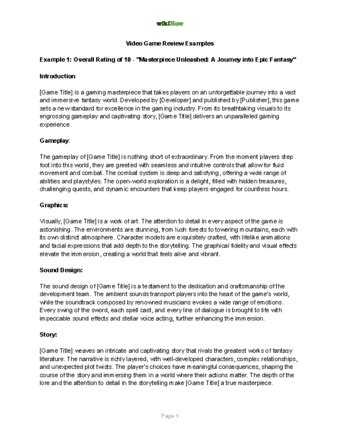
A well-structured re-review typically includes:
- An introduction that briefly summarizes the game’s journey since the initial review and the reason for the re-review.
- A summary of key updates, highlighting the most significant changes and new content.
- Detailed analysis of how these changes have impacted gameplay, monetization, narrative, technical performance, and overall player experience.
- A comparison to the game’s previous state and how it stacks up against competitors.
- A revised verdict or score (if applicable to the platform’s review policy), clearly explaining the rationale behind any changes.
- A conclusion that advises readers on who the game is currently for and whether it’s worth revisiting or jumping into for the first time.

Conclusion: The Ongoing Commitment to Accuracy
Re-reviewing live-service games is no longer an optional extra but a fundamental aspect of modern game criticism. It demands a commitment to ongoing engagement, critical thought, and transparent communication. By embracing effective re-review strategies, critics can ensure their work remains relevant, provides genuine value to their audience, and accurately reflects the ever-changing reality of the games they cover. This dedication ultimately strengthens the credibility of game journalism and fosters a more informed gaming community.