My gaming PC has low FPS; how do I diagnose CPU or GPU bottlenecks?

Understanding Gaming PC Bottlenecks
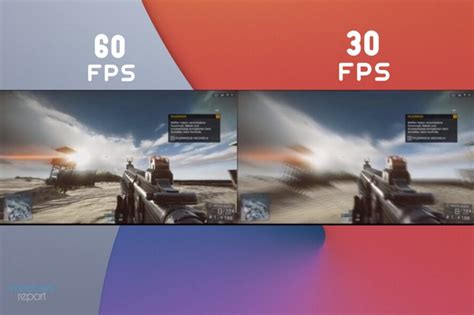
Low frames per second (FPS) can plague even powerful gaming PCs, turning an immersive experience into a stuttering mess. Often, the culprit is a bottleneck – a component that limits the performance of others, preventing your system from reaching its full potential. Identifying whether your CPU (Central Processing Unit) or GPU (Graphics Processing Unit) is the limiting factor is the first step toward a solution.
A CPU bottleneck occurs when your processor isn’t fast enough to feed instructions and data to your graphics card at a sufficient rate. This often happens in CPU-intensive games or scenarios, even if you have a top-tier GPU. Conversely, a GPU bottleneck means your graphics card is struggling to render frames fast enough, usually because it’s not powerful enough for the game’s graphical settings or your chosen resolution, regardless of how fast your CPU is.

Common Symptoms and What They Mean
Observing your system’s behavior can offer initial clues:
- Consistent Low FPS, High GPU Usage (95-100%), Low CPU Usage: This is a strong indicator of a GPU bottleneck. Your graphics card is working at its maximum capacity but still can’t deliver the desired frame rate.
- Stuttering, Frame Rate Dips, High CPU Usage (90-100% on multiple cores), Lower GPU Usage: This often points to a CPU bottleneck. Your processor is struggling to keep up, leading to inconsistencies, even if your GPU isn’t fully utilized.
- Low Usage on Both CPU and GPU: This is less common but could indicate other issues like RAM limitations, overheating, outdated drivers, or even a game engine limitation.
Essential Tools for Diagnosis
To accurately diagnose a bottleneck, you’ll need monitoring software that displays real-time statistics during gameplay. Popular and reliable options include:
- MSI Afterburner (with RivaTuner Statistics Server): This is arguably the most comprehensive tool, allowing you to monitor CPU and GPU usage, temperatures, clock speeds, and frame rates in an in-game overlay.
- HWiNFO64: Provides extensive sensor data for all your hardware, which can be useful when cross-referencing with Afterburner.
- Task Manager (Windows): While basic, it can give you a quick glance at overall CPU and GPU utilization (Performance tab). It’s not ideal for detailed in-game monitoring.
- In-game Overlays: Many modern games include built-in performance overlays that display FPS, CPU/GPU usage, and sometimes temperatures.
How to Interpret Your Monitoring Data
Diagnosing a GPU Bottleneck
Launch your game and enable your monitoring overlay (e.g., MSI Afterburner). Pay close attention to the GPU Usage percentage. If it consistently hovers around 95-100% while your FPS is lower than you expect, and your CPU Usage (especially per-core) is significantly lower (e.g., 50-70% or less), you likely have a GPU bottleneck. Your graphics card is working as hard as it can, but it’s not enough.
Test Strategy: Lower the game’s graphics settings (e.g., resolution, texture quality, anti-aliasing). If your FPS increases significantly, it confirms your GPU was the limiting factor, as it now has less work to do.

Diagnosing a CPU Bottleneck
Conversely, if your CPU Usage (look at overall usage and individual core usage) is consistently high (90-100% on several cores or overall) while your GPU Usage is significantly lower (e.g., 60-80% or even less), you’re facing a CPU bottleneck. Your processor can’t keep up with the demands of the game or other background processes, leaving your powerful GPU waiting for instructions.
Test Strategy: Lower CPU-intensive settings in the game, such as draw distance, crowd density, physics calculations, or shadow quality. You can also try increasing the resolution – if your FPS doesn’t drop significantly (or even stays the same), it further indicates a CPU bottleneck, as the CPU’s workload remains relatively constant regardless of resolution.

What to Do After Diagnosis
Once you’ve identified the bottleneck, you can make informed decisions:
- GPU Bottleneck: Consider upgrading your graphics card, or lower demanding graphics settings in games (resolution, texture quality, anti-aliasing) to achieve better FPS with your current hardware.
- CPU Bottleneck: Upgrading your CPU (which might also require a new motherboard and RAM) is often the most effective solution. Alternatively, lower CPU-intensive game settings like draw distance, population density, or physics quality. Ensure you close unnecessary background applications to free up CPU cycles.
- Other Checks: Regardless of the bottleneck, always ensure your drivers are up to date, your system is free of malware, and your PC isn’t overheating, as these can all negatively impact performance.
Conclusion
Diagnosing CPU or GPU bottlenecks is a fundamental skill for any PC gamer. By utilizing monitoring tools and understanding how to interpret the data, you can accurately pinpoint the weakest link in your system. This knowledge empowers you to either optimize your game settings for the best possible experience with your current hardware or make strategic upgrade decisions that will deliver the most significant performance boost for your gaming PC.