



Optimal monitor settings for competitive FPS: refresh rate, response time, vsync?
In the high-stakes world of competitive First-Person Shooters (FPS), every millisecond counts. Beyond raw aiming skill and strategic prowess, your hardware setup plays a crucial role in giving you an edge. Among these, your monitor’s settings are paramount, directly impacting visual clarity, responsiveness, and overall game feel. Understanding and optimizing key parameters like refresh rate, response time, and the often-debated VSync can be the difference between victory and defeat.
The Power of Refresh Rate: Smoothness Redefined
Refresh rate, measured in Hertz (Hz), dictates how many times per second your monitor can update its display. A higher refresh rate means more frames per second (FPS) can be displayed, leading to a significantly smoother and more fluid visual experience. For competitive FPS players, this translates directly into better target tracking, clearer motion, and the ability to react faster to on-screen events.
While 60Hz was once the standard, modern competitive gaming demands much more. Monitors with 144Hz are now considered the entry-level for serious players, offering a noticeable improvement over 60Hz. Stepping up to 240Hz or even 360Hz provides an even more refined experience, particularly for highly skilled players who can leverage the minute advantages in motion clarity. To fully benefit, your graphics card must be able to push frame rates consistently equal to or higher than your monitor’s refresh rate.

Response Time: Eliminating Ghosting and Blur
Monitor response time refers to the speed at which a pixel can change from one color to another, typically measured in milliseconds (ms) from gray-to-gray (GtG). A lower response time is crucial for competitive FPS because it minimizes motion blur and “ghosting” – the lingering trails left by fast-moving objects. In a fast-paced shooter, clear visuals without blur allow for precise target acquisition and tracking, ensuring you don’t miss that critical headshot.
For competitive play, a response time of 1ms GtG or lower is highly recommended. Some monitors even boast 0.5ms GtG, pushing the boundaries of visual clarity. It’s important not to confuse response time with input lag; while both affect responsiveness, response time is about pixel transitions, whereas input lag is the delay between your action and its display on screen.
The VSync Dilemma: Tearing vs. Input Lag
VSync (Vertical Synchronization) is a display option designed to synchronize your graphics card’s frame output with your monitor’s refresh rate. Its primary purpose is to eliminate screen tearing, an artifact that occurs when your GPU renders frames faster than your monitor can display them, resulting in multiple frames appearing on the screen simultaneously, creating a visible “tear” line.

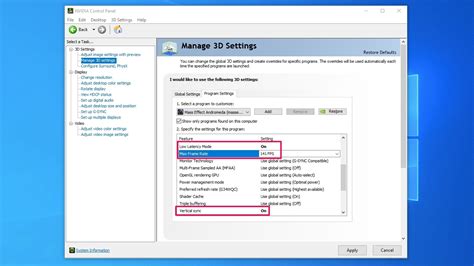
While VSync effectively resolves screen tearing, it comes with a significant drawback for competitive FPS players: increased input lag. By forcing the GPU to wait for the monitor, VSync introduces a delay between your mouse click or keyboard press and the corresponding action appearing on screen. This added latency can be detrimental in games where split-second reactions are vital. Therefore, for most competitive FPS scenarios, VSync is generally recommended to be turned OFF.
Adaptive Sync Technologies: The Best of Both Worlds
Fortunately, modern display technologies like NVIDIA’s G-Sync and AMD’s FreeSync offer a superior solution. These adaptive sync technologies allow your monitor’s refresh rate to dynamically match the frame rate output by your graphics card. This means you get the benefits of tear-free visuals without the significant input lag associated with traditional VSync.
For competitive players with compatible hardware, enabling G-Sync or FreeSync is highly recommended. It provides the smooth, tear-free experience of VSync but maintains the low input lag crucial for high-level play. Ensure it’s properly enabled in your GPU control panel and monitor settings.

Beyond the Big Three: Other Optimization Tips
While refresh rate, response time, and VSync/Adaptive Sync are paramount, a few other settings can further refine your competitive FPS experience:
- Overdrive/OD Settings: Many monitors have an Overdrive (or Trace Free, Response Time Compensation) setting that accelerates pixel transitions. Experiment with this, but be cautious; too high a setting can introduce inverse ghosting (artifacts that look like bright trails). Find the sweet spot that minimizes blur without causing artifacts.
- Low Input Lag Mode / Game Mode: Some monitors feature a dedicated “Game Mode” or “Low Input Lag” setting. This mode often bypasses certain image processing features to reduce the overall latency between your input and the display. Always enable this for competitive play.
- Black Equalizer/Clarity Boost: These settings can adjust gamma and contrast in dark areas, potentially making enemies easier to spot in shadows. Use sparingly, as overly aggressive settings can distort colors and overall image quality.
Optimal Competitive FPS Monitor Configuration Summary
To summarize the ideal setup for competitive FPS:
- Refresh Rate: Aim for 240Hz or higher. At minimum, 144Hz.
- Response Time: 1ms GtG or lower.
- VSync: Turn OFF.
- Adaptive Sync (G-Sync/FreeSync): Enable if your monitor and GPU support it. This is the preferred solution for tear-free, low-latency gaming.
- Monitor Settings: Enable “Low Input Lag Mode” or “Game Mode.” Adjust “Overdrive” carefully to reduce blur without inverse ghosting.
Conclusion
Optimizing your monitor settings is a critical, yet often overlooked, component of achieving peak performance in competitive FPS titles. By prioritizing a high refresh rate, ultra-low response time, and intelligently utilizing (or bypassing) VSync with adaptive sync technologies, you can ensure your display never holds you back. Fine-tune these settings, and you’ll be well on your way to a more responsive, clearer, and ultimately more victorious gaming experience.