What monitor refresh rate balances FPS for competitive games & mid-tier GPUs?
Finding the Sweet Spot: Refresh Rate for Competitive Gamers with Mid-Tier Hardware
For competitive gamers, every millisecond counts. The fluidity of your gameplay, the responsiveness of your inputs, and your ability to react to on-screen events are all heavily influenced by two critical factors: your graphics card’s ability to render frames per second (FPS) and your monitor’s refresh rate. While high-end systems can chase the highest refresh rates, many gamers operate with mid-tier GPUs. The challenge then becomes finding the monitor refresh rate that maximizes your competitive edge without overshooting what your hardware can consistently deliver.

Understanding Refresh Rate and FPS Synergy
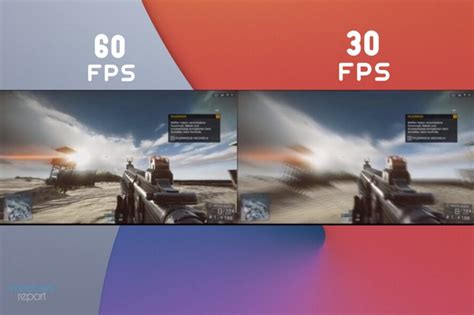
Refresh rate, measured in Hertz (Hz), indicates how many times your monitor updates the image on its screen per second. A 144Hz monitor, for instance, can display 144 individual frames every second. Frames Per Second (FPS) is the rate at which your graphics card renders those frames. For a truly smooth experience, your FPS should ideally match or exceed your monitor’s refresh rate. When your GPU produces significantly more frames than your monitor can display, you’re leaving performance on the table. Conversely, if your refresh rate is too high for your GPU to consistently meet, you’ll experience screen tearing or inconsistent frame delivery, undermining your competitive advantage.
Defining the Mid-Tier GPU Landscape
A mid-tier GPU typically refers to graphics cards that offer a strong balance of performance and price, capable of running modern games at decent settings (often 1080p high or 1440p medium/high) while maintaining playable frame rates. Examples from recent generations might include the NVIDIA GeForce RTX 3060/4060 or AMD Radeon RX 6600 XT/7600. These cards are excellent for mainstream gaming but might struggle to consistently push extremely high frame rates (e.g., 200+ FPS) in graphically intensive titles, especially at higher resolutions.
![Best Graphics Cards For Video Editing And Rendering [2025 List]](/images/aHR0cHM6Ly90czIubW0uYmluZy5uZXQvdGg/aWQ9T0lQLnNmYURfYnhZT1ZDaUFpVXhWN1Q0VUFIYUVDJnBpZD0xNS4x.webp)
The Competitive Edge: Why Higher Refresh Rates Matter (Up to a Point)
In competitive games like Valorant, CS:GO, Apex Legends, or Call of Duty, a higher refresh rate directly translates to smoother visuals, reduced input lag, and a quicker response time. You see enemy movements earlier and more clearly, and your aim feels more precise. The jump from 60Hz to 120Hz/144Hz is profoundly noticeable, offering a significant competitive advantage. However, the gains become progressively smaller as you go higher (e.g., 144Hz to 240Hz), especially if your GPU can’t consistently maintain those frame rates.
The Optimal Balance: 144Hz or 165Hz
For gamers with a mid-tier GPU aiming for competitive play, a 144Hz or 165Hz monitor at 1080p resolution is overwhelmingly the sweet spot. Here’s why:
- Consistent Performance: Mid-tier GPUs can reliably hit 144-165 FPS in many popular competitive esports titles (e.g., CS:GO, Valorant, League of Legends) even at 1080p high settings. In more demanding competitive games (e.g., Apex Legends, Warzone), you might need to adjust settings to medium or low, but maintaining 144 FPS is often achievable.
- Significant Competitive Boost: The visual fluidity and reduced input lag compared to 60Hz or 75Hz are substantial and immediately noticeable, providing a tangible edge.
- Cost-Effectiveness: 144Hz/165Hz monitors are widely available and relatively affordable, offering excellent value for the performance gains.
- Future-Proofing (within reason): While not the absolute peak, 144Hz/165Hz will remain a highly competitive refresh rate for years, especially at 1080p.

If you’re playing at 1440p with a mid-tier GPU, a 144Hz monitor is still an excellent target, but be prepared to lower graphical settings more aggressively in demanding titles to maintain consistent frame rates.
Why Higher Might Be Overkill (for Mid-Tier)
While 240Hz or even 360Hz monitors exist, pushing a mid-tier GPU to consistently hit these frame rates in anything but the least demanding competitive titles (like CS:GO or Valorant on very low settings) is often unrealistic. If your GPU can only deliver 150 FPS on a 240Hz monitor, you’re not fully utilizing the monitor’s capabilities, and the inconsistent frame delivery (large fluctuations below the refresh rate) can sometimes feel worse than a consistently locked lower refresh rate.

The money saved by not opting for a 240Hz+ monitor can often be better invested in a higher quality 144Hz/165Hz panel with better response times, G-Sync/FreeSync compatibility, or even put towards a future GPU upgrade.
Beyond Refresh Rate: Other Considerations
- Adaptive Sync (G-Sync/FreeSync): Essential for competitive gaming with mid-tier GPUs. These technologies synchronize your monitor’s refresh rate with your GPU’s frame rate, eliminating screen tearing and reducing stutter, even when your FPS fluctuates below the monitor’s max refresh rate.
- Response Time: Look for monitors with a low response time (1ms GTG is ideal) to minimize motion blur and ghosting.
- Panel Type: TN panels often have the fastest response times, while IPS panels offer better color accuracy and viewing angles, but slightly slower response (though modern IPS panels are very fast).
Conclusion
For competitive gamers running a mid-tier GPU, the sweet spot for monitor refresh rate is unequivocally 144Hz or 165Hz, particularly at 1080p resolution. This range provides a substantial competitive advantage over standard 60Hz displays, delivering incredibly smooth and responsive gameplay that your hardware can consistently support. Investing in a monitor with adaptive sync technology (G-Sync or FreeSync) alongside this refresh rate will further enhance the experience, ensuring a tear-free and stutter-free visual feast, allowing you to focus purely on your game and climb those ranks.