What’s better for competitive gaming: 1440p 144Hz or 1080p 240Hz monitor?

The Competitive Edge: Resolution vs. Refresh Rate
In the high-stakes world of competitive gaming, every millisecond and pixel can make a difference. Choosing the right monitor is a critical decision that directly impacts performance and enjoyment. The current battleground for many serious gamers often pits two formidable options against each other: the visually rich 1440p at 144Hz versus the ultra-fast 1080p at 240Hz. Both offer significant advantages over standard displays, but which one truly gives you the upper hand?
Understanding the Fundamentals
Before diving into the specifics, let’s quickly recap what these numbers mean:
- Resolution (e.g., 1440p, 1080p): This refers to the number of pixels displayed on the screen. Higher resolution means more pixels, resulting in a sharper, more detailed image. 1440p (2560×1440 pixels) offers a significant visual upgrade over 1080p (1920×1080 pixels).
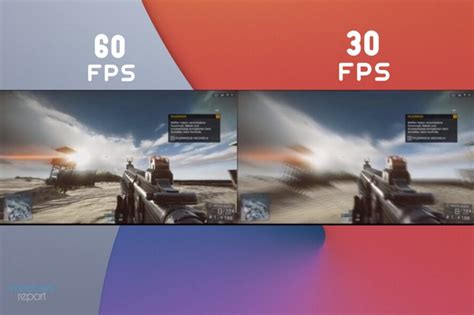
- Refresh Rate (e.g., 144Hz, 240Hz): This indicates how many times per second the monitor updates its image. A higher refresh rate translates to smoother motion, reduced motion blur, and a more responsive feel, which is crucial in fast-paced games.
1440p 144Hz: The Immersive Competitor
A 1440p 144Hz monitor offers a compelling blend of sharpness and speed. The increased pixel density of 1440p provides a noticeably crisper image, allowing you to discern finer details in game environments. This can be beneficial in identifying distant enemies or subtle environmental cues that might be missed on a 1080p screen.
At 144Hz, the refresh rate is still excellent for competitive play, offering a significant smoothness boost over standard 60Hz monitors. Games feel fluid, and aiming can be more precise. It strikes a balance, giving you visual fidelity without completely sacrificing the responsiveness needed for high-level competition.
Pros:
- Superior Visual Detail: Sharper images, better text clarity, and more immersive graphics.
- Good Balance: A great all-rounder for both competitive gaming and general desktop use/media consumption.
- Still Very Responsive: 144Hz is a high refresh rate, providing excellent smoothness and low input lag.
Cons:
- More Demanding on GPU: Pushing more pixels requires a more powerful graphics card to maintain high frame rates.
- Slightly Slower: While fast, it’s not as instantaneous as 240Hz.

1080p 240Hz: Speed Above All Else
For the uncompromising esports enthusiast where every fraction of a second matters, the 1080p 240Hz monitor is often the preferred choice. The 240Hz refresh rate delivers an unparalleled level of fluidity and responsiveness. This ultra-high refresh rate significantly reduces input lag and motion blur, making target tracking easier and allowing for quicker reaction times.
While 1080p may not offer the same visual crispness as 1440p, in the heat of a competitive match, pixels often take a backseat to pure performance. The lower resolution also means your GPU has an easier time pushing extremely high frame rates, which is crucial for consistently hitting and maintaining 240+ FPS to take full advantage of the monitor’s capabilities.
Pros:
- Ultimate Speed and Responsiveness: Unmatched fluidity, minimal input lag, and reduced motion blur.
- Easier on GPU: Less demanding resolution allows for higher, more consistent frame rates with less powerful hardware.
- Competitive Advantage: Can provide a noticeable edge in fast-paced shooters and fighting games.
Cons:
- Lower Visual Fidelity: Noticeably less sharp than 1440p, especially on larger screens.
- Less Ideal for Non-Gaming: For productivity or media consumption, 1080p can feel dated compared to 1440p.
Key Factors to Consider
Your Graphics Card (GPU)
This is arguably the most important factor. Can your GPU consistently hit 144 FPS at 1440p or 240 FPS at 1080p in the games you play? There’s no point in buying a 240Hz monitor if your system can only push 150 FPS. Always aim for your average FPS to be at or above your monitor’s refresh rate for the best experience.
The Games You Play
- Fast-Paced FPS (CS:GO, Valorant, Overwatch, Apex Legends): Here, 240Hz often shines, prioritizing raw speed and responsiveness over visual detail.
- MOBA/RTS (League of Legends, Dota 2, StarCraft II): While higher refresh rates are nice, the competitive advantage of 240Hz over 144Hz is less pronounced. 1440p might offer a more expansive view of the battlefield.
- Story-Driven/Visually Rich Games (Cyberpunk 2077, Elden Ring): For these, 1440p 144Hz provides a much more immersive and visually stunning experience, where the slight drop in refresh rate is easily offset by the graphical fidelity.
Personal Preference and Budget
Some gamers are highly sensitive to even minor input lag and motion blur, making 240Hz a clear winner. Others prioritize sharp visuals and immersive environments. Also, consider your budget; high-end 1440p 144Hz monitors can sometimes be similarly priced or even cheaper than top-tier 1080p 240Hz panels, depending on features and panel type.
Conclusion: Making the Right Call
There’s no single “better” monitor; the ideal choice depends on your specific priorities and hardware.
- Choose 1080p 240Hz if: You primarily play fast-paced competitive FPS games, your GPU might struggle with 1440p at high frame rates, and you prioritize every possible competitive edge and ultimate responsiveness above all else.
- Choose 1440p 144Hz if: You want a more balanced experience with significantly better visual fidelity, play a mix of competitive and graphically intensive single-player games, and have a GPU powerful enough to consistently drive high frame rates at 1440p.
Ultimately, both options represent excellent choices for competitive gaming. Evaluate your system’s capabilities, the types of games you play most, and your personal preference for visuals versus raw speed to make an informed decision that elevates your gameplay.