What’s the ideal refresh rate & resolution for competitive FPS gaming monitors?

Optimizing Your Display for Competitive Edge
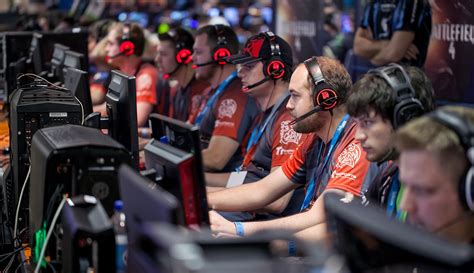
For competitive First-Person Shooter (FPS) players, a monitor isn’t just a display; it’s a critical component that can dictate success or failure. Every millisecond counts, and the right combination of refresh rate and resolution can provide a tangible advantage. But what exactly is the ‘ideal’ setup when aiming for peak performance?
The Crucial Role of Refresh Rate
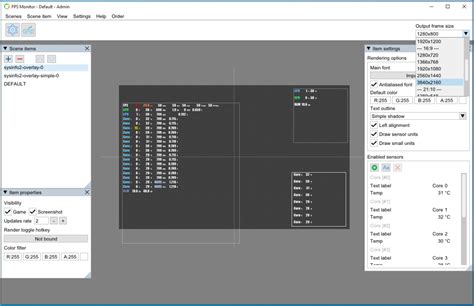
Refresh rate, measured in Hertz (Hz), indicates how many times your monitor updates the image on the screen per second. A higher refresh rate means a smoother, more responsive visual experience. For competitive FPS, this translates directly into a better ability to track fast-moving targets, reduced motion blur, and a feeling of greater ‘snappiness’ in your gameplay.
- 144Hz: The Modern Baseline. For many years, 144Hz was the gold standard, offering a significant jump from 60Hz. It provides a noticeable improvement in smoothness and responsiveness, making it an excellent entry point for serious competitive play.
- 240Hz: The Competitive Sweet Spot. This is where most professional FPS players find their comfort zone. The jump from 144Hz to 240Hz, while less dramatic than 60Hz to 144Hz, still offers a perceptible advantage in terms of fluidity and input latency. It requires a powerful GPU to consistently push 240+ frames per second (FPS) in demanding titles.
- 360Hz+: The Bleeding Edge. Monitors pushing 360Hz or even 500Hz are now available. These offer the absolute pinnacle of smoothness and lowest theoretical input lag. However, the performance gains over 240Hz become increasingly marginal for most human perception, and they demand extremely powerful hardware to fully utilize. They are primarily for professional players at the highest echelon of esports.
Resolution: Clarity vs. Performance
Resolution refers to the number of pixels a display has, typically expressed as width x height (e.g., 1920×1080). While higher resolutions offer greater visual fidelity and screen real estate, competitive FPS often prioritizes frame rate over raw pixel count.
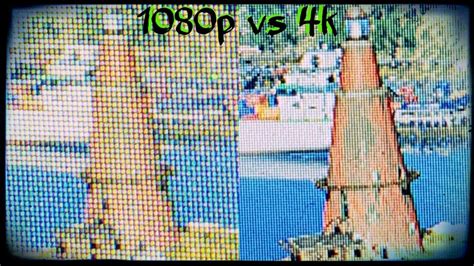
- 1080p (1920×1080): The FPS Standard. For the vast majority of competitive FPS players, 1080p remains the ideal resolution. Why? Because it’s significantly easier for your GPU to render high frame rates at 1080p. This allows you to consistently hit and maintain the high FPS needed to fully utilize a 144Hz, 240Hz, or even 360Hz monitor. Lower pixel density can also make enemies appear slightly larger at a distance, a minor but sometimes useful competitive aspect.
- 1440p (2560×1440): The Balanced Option (for some). 1440p offers a crisper image than 1080p without the extreme performance hit of 4K. If you have a top-tier GPU (e.g., RTX 3070/RX 6700 XT or better) capable of pushing very high frame rates at 1440p, this can be a viable option for a more visually appealing competitive experience. However, always prioritize stable high frame rates over resolution.
- 4K (3840×2160): Generally Not Recommended. While visually stunning, 4K resolution is typically not suitable for competitive FPS. The immense pixel count demands an enormous amount of GPU power, making it exceedingly difficult to achieve the high, stable frame rates necessary for competitive play, even with the most powerful graphics cards.
The Interplay: Balancing Refresh Rate, Resolution, and GPU Power
The ‘ideal’ setup is not just about the monitor; it’s about your entire system. A 240Hz monitor paired with a GPU that can only push 100 FPS will not yield the intended benefits. Always aim to match your monitor’s capabilities with your PC’s ability to render frames consistently. NVIDIA’s G-Sync and AMD’s FreeSync technologies are also invaluable here, providing variable refresh rate synchronization to eliminate screen tearing and stuttering when your frame rate doesn’t perfectly match your monitor’s refresh rate.
Conclusion: Finding Your Personal Ideal
For most competitive FPS players, a 240Hz refresh rate combined with a 1080p resolution is the ideal sweet spot. This combination delivers incredible responsiveness, maintains high frame rates even with mid-to-high-tier GPUs, and offers the best balance of performance and visual clarity for competitive advantage. If you have an exceptionally powerful system and prefer a slightly sharper image, 1440p at 240Hz can be considered, but ensure your GPU can handle it without sacrificing critical frame rate stability. Ultimately, the goal is consistent, high FPS to fully leverage your monitor’s refresh rate, giving you the edge needed to outplay your opponents.